

Book Review
The Gurdjieff Movements
A Communication of Ancient Wisdom
By Wim van Dullemen
Hohm Press, 291 pp.
Mr. Wim van Dulleman’s recent book titled The Gurdjieff Movements provides a valuable, unique look and categorization of a part of G. I. Gurdjieff’s teaching commonly known as the Movements—a part that, after his death in 1949, was the last of his teaching to be made, at least to some degree, publicly accessible. Oddly the Movements were one of the first parts the public was given access to by Mr. Gurdjieff himself in the 1920’s. It is in within this conundrum that van Dulleman has released the most definitive book available (and related video/film) of the Movements. From the beginning it is quite clear that he has done so with little reluctance but a fair amount of trepidation, “Who am I to venture into this hornets’ nest, and am I capable of providing a faithful report?” he asks. To the first question he devotes much of the first part of the book and this is up to each reader to decide, as he makes his case directly and indirectly as to his knowledge and understanding of the frame work and basics of Gurdjieff’s teaching and its history. But as to the second, regarding the Movements themselves in Part II, he appears to have well succeeded in his self-imposed task.
Part I
In the first part of the book, titled Background, van Dulleman, of Dutch background and currently living in Berlin, provides the reader with what might be considered as a decidedly Northern European view or overview of the teaching, or “Legacy” as he names it, and his relationship to it. Van Dullemen is by calling a musician, a pianist, though he speaks little of his career in ordinary life; but it is this interest as well as a general seeking that moved him toward the Work. Having been involved in or associated with the Work since the early 1960’s in Europe, he has had contact with some of Gurdjieff’s direct students. He begins with a description of his meeting with John Bennett in 1965. Though somewhat brief, it seems to have had a profound affect upon him as he sees something “very special” in Bennett, “His eyes emitted a kind of black light…I could no longer perceive his face very clearly…transformed into the black granite masks of the Buddha…” The experience continued, taking him outside of himself. Upon recovering his composure, he asks what kind of a person Gurdjieff was? To which Bennett answers, “I can assure you that Gurdjieff was a good man.” Bennett advises him to contact the “Institute Gurdjieff” in Paris due to his interest in music.
Van Dulleman is a classifier, perhaps by nature, and like many other people, makes an attempt to classify both Gurdjieff himself and his teaching. He compares Gurdjieff to various well-known historic figures, a few among them: Nietzsche, Wagner Galileo, Freud, Blavatsky and others not so well-known, all of whom he states have some similarities but have given nothing comparable to the breadth and depth of Gurdjieff’s Legacy. This comparison continues throughout the book, including quotes from various people at the beginning of each of the first 15 chapters. These quotes, excepting one, are/were from people not in the Work. Yes, let’s acknowledge that not all the wisdom, knowledge, aphorisms and spirituality of the world was brought to humanity by Gurdjieff, but this was found to be somewhat contrived, fluffy and overdone moving close to the point of being annoying. Van Dulleman writes of Gurdjieff’s Legacy, “A preliminary inventory presents us with three main elements, each representing a different discipline, three independent worlds as it were: Gurdjieff’s books, music and Movements.” Independent worlds? Further he states, “…Gurdjieff was an esoteric teacher and not an author, composer or choreographer.” Better it seems would be: he was an esoteric teacher who took on the role of an author, composer and choreographer as ways to transmit his teaching to the world. Why in effect be an apologist for Gurdjieff’s perceived failings in these roles as compared to the so-called professionals of these fields?
To be clear van Dulleman does not consider these three pillars of Gurdjieff’s Legacy to be his teaching. “When I mention Gurdjieff’s teaching I mean his own words…that he gave in a form that was comprehensible for each and every one of his small circle of pupils in the first stage…from 1912 to 1924.” 1924 being the year of the auto accident and the year in which the author sees as the end of Gurdjieff’s primary period of verbal transmission. Van Dulleman does not consider this teaching part of his Legacy because its transmission, to future students, was given through his students and not directly from Gurdjieff himself. “Words are more vulnerable to false interpretation, manipulation and even sheer fabrication” This is quite true, but also a rather extreme position to take to which he later makes some limited, less than whole-hearted exceptions, such as the book In Search of the Miraculous. He is in effect, intentionally or not, setting the table to later marginalize and lower the value of certain current aspects of the Gurdjieff Work as it has evolved. But in the meantime, he states that, “My motivation for writing this book is to reply to the question of coherence in Gurdjieff’s legacy….” His answer is a “…heart felt, Yes….” The books (Gurdjieff’s own), music and Movements correspond to the three centers, mental, emotional, instinctual/moving and together form a coherent Legacy. This view of what has come to be called the Gurdjieff Work has some resonance to the practice of certain groups in America, which have no teacher/leader, as is the case of his current group which he “coordinates” but does not lead.
In this section Van Dullemen gives cursory looks at The Struggle of the Magicians and Beelzebub’s Tales to his Grandson. The former being a never publicly performed ballet whose music and dances have been almost entirely lost, but whose script remains and of which the author considers as a first step to All and Everything, one of the pillars of Gurdjieff’s legacy. As to it being a trilogy, he says “Beelzebub’s Tales to his Grandson…is rounded off volume that is entirely independent…most important book….The two latter books were likely written to read out loud…,” he feels perhaps not to be published and may not be complete. He includes, as is his modus, comparisons to other writer’s works, among them: Mark Twain and Adolf Wölfi under a subheading of Two Remarkable Parallels.
Van Dullemen writes of Gurdjieff’s death and the fragmentation of the Work, which had already begun with Uspensky and Orage leaving Gurdjieff, but which accelerated after Gurdjieff died, with the rift between Jeanne de Salzmann and John Bennett, which he calls “…a catastrophic occurrence, and that the current situation for the Movements is closely connected with this…” In this he seems to be sincerely troubled and yet titles this chapter Gurdjieff’s Final Years, his Death and the Succession (To the Throne).The last three words are revealing of van Dulleman’s attitude to the general form of the Work as he has experienced it, past and present. He is a critic, sometimes subtle, sometimes not, and this is reflected as he explores his experiences with Work groups and the other aspects of how the Work has and hasn’t been offered and presented.
Part II: The Music and Movements
While van Dullemen includes the music in Part I, his attitude regarding the music and Movements are so similar and so uniformly positive that it seemed best to assess these together. Obviously, as a proficient musician himself, he has a special understanding of what Gurdjieff and de Hartmann accomplished. As is noted in the book, the time of collaboration was relatively short (about two years), “nevertheless …hundreds of compositions…created…traditional music from all sorts of cultures…faithfully represented, and that Gurdjieff’s own work is of such high quality.” Van Dullemen notes that the music was written to accompany the Movements, but also, “…to give musical illustrations while reading from his books, as an emotional version, complementary to the intellectual form comprising words.” He goes on to describe and to categorize Gurdjieff’s musical Oeuvre, which include hundreds of both fragments and fully scored pieces, as well as the history related to this music and its disposition past and present, he notes there is no reliable catalogue of this music.
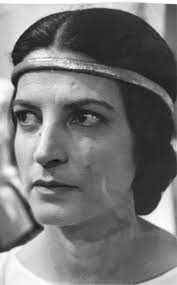
To the heart of the book, The Movements, this Van Dullemen’s mission, begun by what Gurdjieff called a noticeable coincidence, he undertakes to document his personal experiences as well as providing a categorization and catalogue. He began his work with Solange Claustres who was with Gurdjieff from 1942 until Gurdjieff’s death. She was a Movements teacher essentially for the rest of her life. He provides the text of a 1997 interview he had with her in which she describes the movements. This, as well other quotes, and as his own experiences are quite rich and give a sense of van Dullemen’s connection with this Work; though after 15 years, he left the formal Work. He notes, “The participation in the groups, the classes and other activities had, bit by bit, laid waste to all my social contacts.” including the relationship with his wife of the time. After a divorce and a period of seclusion, with a new partner and their young child he began to “…organize courses in listening and playing the music of Gurdjieff and de Hartmann,” thus beginning the phase of his life leading to the publication of this book.
Van Dullemen has chronologically categorized the movements into three periods: 1916-1924; 1937 to end of 1947 beginning of 1948 and end of 1947; beginning of 1948 to Gurdjieff’s death. Movements of the first period are called the “old” Movements, the other two “new” Movements. The worldly purpose of the old Movements, which were deeply developed and studied from about 1919, was for public performance. In this regard, the study of these was quite intense and involved a ”select” group of his students. The old Movements were also accompanied by music of Gurdjieff’s own composition. This is not the case for the new Movements whose music was composed after Gurdjieff died and often improvised by the pianist as the Movements were developed by Gurdjieff. Many, but not all, of the old Movements have remained intact. A period of 13 years passed from the time of Gurdjieff’s auto accident until about 1937 when Jeanne de Salzman’s group was transferred to Gurdjieff (some date this from 1940) and he again took an active role in creating and teaching this part of his Legacy. Indeed, he became very much involved creating the new Movements of which, “A great many…are difficult to execute and require great effort…” How many movements still exist? Van Dullemen “cautiously” estimates 30 from the first period, 175 from the second and 46 from the third.
Van Dullemen goes into some detail involving certain movements, giving basic information as to their derivation, purpose and patterns, such as the Engram and Morse code Movements. Along with his teacher, Solange Claustres, his greatest individual source of information appears to be Dushka Howarth, a daughter of Gurdjieff and one of the “calves” of the late 1940’s. Dushka’s mother, Jessmin Howarth, was a long-time student of Gurdjieff’s and a primary dancer, including public performances in the 1920’s. But he appears to have done much research simply on his own, exploring and following the threads which radiated out of France over the years during and after Gurdjieff’s life. One very interesting example is his encounter with a vestige of Uspensky’s Study Society in England where 20 people, some quite elderly, participated in Movements that had been faithfully and accurately passed down from the original teaching of Jessmin Howarth who instructed Uspensky groups, apparently at the direction of Madame Uspensky, in the late 1930’s. There is much such history in the book, including information on various public performances and archived films.
He ends the book with chapters about transmission of the Movements after Gurdjieff’s death and on recent developments. Some material related to these subjects is also sprinkled through the book. As to preservation, he gives much credit to de Salzman and Jessmin Howath. Regarding the transmission outside the Institute Gurdjieff influence, he also writes of Bennett and of Olgavanna Lloyd Wright both having a role and, in his mind, a generally positive one. As to developments in recent years, he explores the Osho phenomenon, which apparently began with the film of Meetings with Remarkable Men that has a small clip of the Movements at its end. Van Dullemen traces the Osho practice from the Bennett “line of transmission” open to all. The Osho practice, though from Bennett, he considers “… is detached from the inner process that carried through to the external form….” Dushka Howarth, who he had much contact with, at her death placed her entire archive, much of which was gathered by her mother Jessmin, into the public domain. Transference to the New York Public Library Research Division was completed as of 2017. For better or worse the “cat (at least in external form) is out of the bag”. In today’s world secrecy of such things seems nearly impossible, the only real question is does one get out in front of such revelations or just let the process unfold. The release of the film of Meetings may have been a half-hearted attempt at getting in front, but if so, it was a failure and is a great example of unforseeingness, and not just in regard to the Movements. Van Dulleman gives an example from his own life of being taught the Movements in fragments, moving on from one fragment to another. His suspicion being that by teaching in this way the whole movement could never be released from its esoteric confines because no one was ever taught a complete Movement. True or not, the situation of the Movements today brings forth what were said to be some of Gurdjieff’s last words: “I leave you all in a fine mess.”
—Richard Myers— http://www.growingchoongary.com
____________________________________
Notes:
Who am I. Wim van Dullemen, The Gurdjieff Movements: A Communication of Ancient Wisdom (Chino Valley, Arizona: Hohm Press, 2018), Preface p. X.
His eyes emitted. van Dullemen, pp. 11-13.
A preliminary inventory. van Dullemen, pp. 14-15.
My motivation for. van Dullemen, p. 19.
Beelzebub’s Tales. van Dullemen, p. 52.
A catastrophic occurrence. Van Dullemen, p. 76.
Nevertheless …hundreds of compositions. van Dullemen, p. 117.
To give musical illustrations. van Dullemen, p. 118.
The participation in. van Dullemen, p.175.
Organize courses. van Dullemen, p. 176.
A great many. van Dullemen, p. 192.
Is detached from. van Dullemen, p. 253.
 Open to Openness