
Book Review
The Hidden Meanings and Picture-form Language in the Writings of G.I. Gurdjieff (Excavations of the Buried Dog)
By John Henderson
Author House, 301pp.
Hidden meanings but a not so hidden agenda
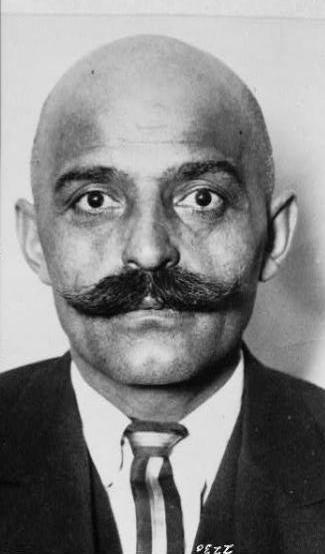
There was a certain expectation with which Hidden Meanings and Picture-Form Language in the Writings of G.I. Gurdjieff by John Henderson was read. Those who have read and studied Mr. Gurdjieff’s books can attest that the deeper meanings of Gurdjieff’s writings are hidden within the format, language, even in the organization and cadence of the words. Gurdjieff himself said that he has intentionally “buried the dog,” that is, concealed the deeper meaning or levels of his writings. Therefore, a book that would provide the means to unlock or, as Mr. Henderson has said, “excavate” these meanings would be, at the least, of considerable titillating interest. Though there is some titillation, Henderson’s book does not live up to its purported task. However, the book does provide an interesting, if misguided and at times wrong, take on the Work both in the past and as it exists today.
There is that with which to agree within this book. Henderson appears to have a real appreciation for The Fourth Way, the teaching Gurdjieff brought to the West. He also considers Gurdjieff’s writings to be a Legominism which was used to help “hurl” the teaching into the future. Additionally, the book also has a strongly held, deeply felt and recurring theme that those who revise the writings of Gurdjieff, even for what they perceive as and which may well be honorable motives, are deeply misguided. The most obvious example of misguided revisionism is the 1992 revision of the English translation of Gurdjieff’s First Series: Beelzebub’s Tales to his Grandson. The 1992 edition is again available and the revisions are quite significant. Other examples of revision given throughout the book are primarily from the Third Series: Life is Real Only Then, When ‘I Am.’ There is no way to verify some of these claims, which may well be true. This said, the general sense of the book is of a man parsing words and punctuation and searching texts of available books as well as other material published and unpublished. Henderson pulls a bit from here and there to create a theme of conspiratorial incompetence. This in its entire minutia is presented to reveal a purported level of detailed prescience by Gurdjieff which is not believable. Henderson, like a medieval monk powered by faith in his own conclusion, cloistered with his books, texts and computer, by picking and choosing examples has “proven” what he wishes. He believes he has deciphered both the means and the meanings of “the hidden dog.” In this book we are presented the Work after Gurdjieff’s death through the eyes of a da Vinci Code-like conspiracy, but with the premise that Gurdjieff foresaw, created it all and Henderson has herein “cracked” the code.

Henderson’s basic premise is that Gurdjieff’s booklet, “The Herald of the Coming Good” (fully reprinted within this book), is the key to deciphering Gurdjieff’s other writings. Henderson elevates Herald to a high position as Gurdjieff’s only book that has not faced revision. Gurdjieff, of course, would have known this as, unlike his other writings, it was published while he was alive. Henderson believes Gurdjieff foresaw all his other writings would be tampered with. There is general agreement with the supposition that Gurdjieff with his deep understanding of man’s psychology, by telling people not to read Herald, likely intended Herald to be read. Henderson makes much of the “hidden” breathing exercise within Herald. Yes, it’s there but a single, relatively rudimentary exercise, in and of itself is not going to bring one to objective-conscious and being understanding. Henderson, though, does not stop there. He proffers an unwavering belief that another book is the key to the understanding of the key. That book is Teachings of Gurdjieff: A Pupils Journal by C.S. Nott. Mr. Nott, whom Henderson throughout his book calls “Patriarch Nott,” was originally a student of A. R. Orage. Nott spent time with Gurdjieff at the Prieuré and later with P. D. Ouspensky. Nott’s book is well worth reading. The problem is not the book but that Nott has, for Henderson, taken on the role of the Patriarch of the Work. Within Teachings is also Orage’s Commentary on Beelzelebub’s Tales, and at the end of Teachings is a summation of what Frank S. Pinder, a long-time student, said of Gurdjieff. These three men are for Henderson “The Three Wise Men,” and their writings are, according to Henderson, the key to the key (Herald) to the unlocking of Gurdjieff’s Legominism.
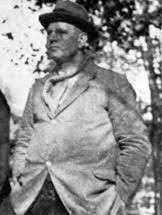
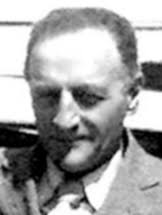
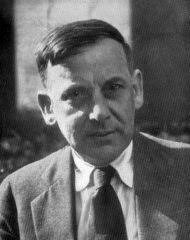
Henderson essentially consigns Gurdjieff’s other direct students to varying degrees of ineptitude and some of engaging in nefarious conduct (revisionism). All are lumped into the role of what today might be called “useful fools.” Henderson continually calls these students “guinea pigs and lab rats.” Accordingly, they were useful to Gurdjieff in his continuing quest to understand the human beings inhabiting Earth. Additionally, they may have gained a bit from contact with Gurdjieff and provided some partially useful writings; but overall, they were merely experiments. Clearly, by his actions and words, Gurdjieff was experimenting. He was trying to find some way to bring the ancient teaching of the Fourth Way to the various peoples of the West. It is true that he did considerable reconfiguration of the presentation of the teaching. This reconfiguration was due to external circumstances, such as wars, revolution and the Great Depression, and events, such as his car crash, which directly affected his ability to teach. As his group of students expanded from Russians to many other nationalities, the teaching expanded in scope and was presented in a manner that had an initial “appeal” to the different peoples that were being sought as students. Without doubt, there were many failures among his students. At base, it was a general inability to deeply see their vanity and self-love and become conscious of their egotism. Nonetheless, Henderson’s denigration of Gurdjieff’s direct students goes far beyond their struggles and essentially gives no respect for the roles they filled and extraordinary efforts they made in keeping the teaching available to those in the Work today.
Sometimes a Cigar is Just a Cigar
Henderson, in the course of the book, gives several examples of the “excavated dog.” Some of these are directly given, others he gives clues and direction so that the reader may find these themselves. Henderson does this under the guise of providing tools for the reader to continue on with further unearthing. There is a legitimate questioning as to whether anything should be excavated or revealed for a reader. If this had been Gurdjieff’s intent, he could have just given this material, rather than to have buried it. There is also a question of Henderson’s methodology as he presents what could be called a mechanical method of excavation—useful but incomplete and at times coming to a wrong interpretation. One example of the directly given “excavated dog” is that in Henderson’s opinion, the Akhaldans were not what they were presented as in a typical reading of Beelzebub’s Tales. That is, they were not “…that truly great society of ordinary three-brained beings—a society which in its time was throughout the whole universe called ‘envied for imitation’….” The process by which Henderson gleefully comes to his misconstrued, not very relevant conclusions is illustrative of his methodology. To prove his conclusion, Henderson goes into many different passages and punctuations too detailed to be examined in this review. However, it is interesting and revealing to see how he digs the footing of what is to become the foundation of his edifice for the “unveiling” of the Akhaldans. Henderson begins by quoting Orage: “What is Akhaldan? Khaldan means ‘moon,’ ‘A’ means ‘not’….” This partial quotation is the start of a long process of proving that, as he calls them, the A-Khaldans are men without an internal moon, without essence. In other words, they have no possibility of growth of being and are, in effect, dead. But does Orage say this? Here is the quote in its entirety: “What is Akhaldan? Kaladan means ‘moon,’ ‘A’ means ‘not’ or ‘against.’ He is a seeker, a ponderer, one who struggles against the current of ordinary life, which flows down the scale to supply the needs of the moon.” Interestingly, it is not until a reader is much further along in the book, about 190 pages later, that Henderson gives the full quote in which Orage’s interpretation is one that is completely opposite of his. It is supposed that Henderson felt obligated to include the full quote because by not giving it, he would have lost whatever credibility he had. By producing the quote, he belatedly retains a crumb of credibility, though he does so at a cost. The cost being that one of his “wise men,” Orage, is in Henderson’s opinion wrong and that he is right. Thus, he puts himself at a “higher” level of understanding than Orage, a very dubious and precarious position. It is not that Henderson is wrong in all his excavations, as he is not, but he appears to be far from the deep level of understanding that would seem to be prerequisite to authorship of a book of this nature. Further, there remains the question if, and it is a huge if, a book of this nature should be published at all.
Perhaps Henderson’s most confused conclusion is the rejection of the requirement for group work. His claim is that group work is a relic of past failed “experiments” dating from the Russian period. His supposition is that by reading Gurdjieff’s Legominism and the writings of Nott, Orage and Pinder, and doing the exercises “embedded” within these writings, that one can find all that is needed to bring one to a high state. From this acquired state, the deeper meanings of the writings can be understood; and thus one has, in actuality, Gurdjieff as one’s teacher. It is here that Henderson seems completely disconnected from the reality of life that is continually presented in Gurdjieff’s writings. This is what Gurdjieff calls “The Terror of the Situation.” This “Terror” is what students of the Fourth Way, after much work, from deep personal experience can come to understand. That is, we are all mired in the “Situation.” How does a fragmented human stuck in a waking state of “hypnotic sleep” with a person formed by “the abnormal conditions of being existence,” while ensconced in a prison of self-love and vanity, awaken oneself? Henderson’s answer above will have appeal for many people who have been “taken” with or by the ideas of the Work. These people for various reasons are reluctant or unable to enter into group work. This answer would also appeal to people, such as Henderson himself, who have dabbled in group work, and subsequently have become disillusioned. Indeed, there is a common condition of yearning among many people who have left group work but can’t really cut their interest in the Work. It would seem this book presents an enticing onanistic “solution” for their dilemma.
What were Henderson’s motives for writing this book? Does he really believe that people can awaken by themselves with only the “help” of Gurdjieff’s books? The sense is that he believes this, but that people will need help to understand the books. This help can’t be called a teacher, so perhaps the word “guide” is more appropriate. Is Henderson’s book enough of a guide? If the answer is no, who will this “guide” be? The answer, though not directly spoken, does become evident. Henderson, the writer/excavator, near the end of the book directs his readers in the use of an embedded exercise, thus taking on the role of the teacher. Further evidence of his “positioning” is that Henderson has the hubris to take on the cloak of Gurdjieff. This cloak takes the form of an annoying mimic of Gurdjieff’s style of writing—a poor imitation it must be said. The danger of this book is the abandonment of group work with a living teacher with the substitution being a delving into of Gurdjieff’s writings. Until there is the experience of group work with a teacher who has been given the teaching, there cannot be understood the impossibility of coming to what Gurdjieff says is the beginning step towards awakening: “This is why in all ancient teachings the first demand at the beginning of the way to liberation was: ‘Know thyself.’” Work in the Fourth Way begins with “know thyself,” Specifically it begins with body, not as a mentalized looking, but as observation from the position of embodiment. By engaging in this exploration, a student in the Work begins slowly to understand what they in truth are. The slow attainment of self-knowledge is an ongoing and continual work. In this process the student, by working and interacting with other students, while still in ordinary life and with the help of a teacher, is slowly revealed. It would seem quite impossible for this work to be entered into through books and exercises given in books. Gurdjieff has quite directly given both the difficulties and the way this is to be entered into—“Therefore a man who wants to awake must look for other people who want to awake and work with them”….The work of self-study can proceed only in properly organized groups.”
There is another question that arises from the reading of this book: What was Gurdjieff’s purpose for undertaking his writings and his intended use for his writings? On its face, there is agreement with Henderson as was noted earlier. This is the teaching Gurdjieff brought to the West and he wished that it would be preserved in a manner of a Legominism. That is, in a form that would be less likely to be destroyed by geological catastrophes and by what Gurdjieff calls transapalnian perturbations as well as the process of reciprocal destruction (war). Primarily, his concern, which grew from his understanding of the human condition, was a preservation of the teaching from wiseacring by the “abnormal three-brained beings inhabiting Earth.” Taking Gurdjieff’s own words as to what a Legominism is, we see that it can be strongly argued that it was never his intention that this teaching could be transmitted entirely in book form. “This word Legominism… is given to one means existing there of transmitting from generation to generation information…through just those three-brained beings…worthy to be and who are called initiates.” If a Legominism is transmitted through initiates, why even have books? It is likely, but not known, that Gurdjieff felt this was both a fail-safe for preservation, as well as a means of spreading the teaching and that the books could be a useful adjunct and a clarification for the oral teaching. He titled his three series All and Everything and says every “thing” is in the books, but how does one come to understanding of the deeper meanings? It would seem it is not entirely through “things.” That is not by the “mechanical” method that Henderson puts forth to extract knowledge, though this is not entirely without value.
Gurdjieff, in effect, said that the Fourth Way is the way of understanding. “… the fourth way differs from the other ways in that the principal demand made upon a man is the demand for understanding.” Thus, it would seem reasonable to ask: Does this book contribute to the attainment of understanding? Implicit in Henderson’s goals for his book is that it will at the least help in gaining an understanding of Gurdjieff’s Legominism. Before this question can be answered, it would be wise to review what Gurdjieff says about understanding: “Knowledge is one thing, understanding is another thing. People often confuse these concepts and do not clearly grasp what is the difference between them. Knowledge by itself does not give understanding. Nor is understanding increased by an increase in knowledge alone. Understanding depends upon the relation of knowledge to being. Understanding is the resultant of knowledge and being….” The word itself, “under-standing,” is of interest. In its construction, this word is formed from two words of very different and, in some sense, opposite meanings that are put together to form a new word of a very different meaning. In Gurdjieff’s definition of how one comes to understanding, it is two very different parts of man—his being and his knowledge—which are reconciled by the working in the teaching and form an entirely different man, a new man, a man without quotation marks, a man of understanding.
It is only about 60 years after Gurdjieff’s death, and the process of distortion of the teaching he brought is well under way. Gurdjieff continually and pointedly both wrote and spoke about the destruction and distortion of the teachings of the past. While not yet destroyed by war or geologic catastrophe, the fourth way has been distorted by wiseacrings that have spawned a proliferation of faux Work groups. The Fourth Way ideas have also been appropriated in part by a growing proliferation of New Age “conglomerate ways.” The teaching’s core does remain intact but, without doubt, many earnest seekers have been lost to the faux groups. Does this book help to stop this process of distortion? Moreover, does this book help in the reconciliation of a man to come to understanding and thus the preservation of the teaching at least in some minimal way? The sense is no—that while Henderson does believe he is acting to preserve the teaching, and as he says to move Gurdjieff’s “very big plan” forward, the book is, in fact, contributing to the process of its leveling and dilution.
—Richard Myers— http://www.growingchoongary.com
Notes
- If you have not read this book. G. I. Gurdjieff, Life Is Real Only Then When ‘I Am,’ p.50.
- You have done good task at Prieuré. C.S. Nott Teachings of Gurdjieff,p.222.
- Then one truly fine and pivotal day. John Henderson Hidden Meanings and Picture-form Language in the Writings of G.I. Gurdjieff (Excavations of the Buried Dog),p.222.
- G.I. Gurdjieff, Herald of the Coming Good,p.22.
As Gurdjieff states in Herald he needed “to have at my disposal representatives of all 28 “categories-of-types” existing on Earth. This led him to form his Institute. Further, he goes on to say “To make use of people, who display a special interest in an Institute founded by me, for purely personal ends would surely strike those around me as a manifestation of ”egotism”, but at the same time the people, who had anything to do with such an Institute established by me, those, namely, whom I have previously mentioned and in whom the predisposition proper to all men—that of acquiring data and of preparing in their being the soil for the impulse of “objective-conscience” and for the formation of so-called “ essential-prudence”—had not yet entirely atrophied, could, in this way alone, profit by the results of knowledge amassed by me due to exceptional circumstances of my life, and which had regard to nearly all the aspects of reality and objective truth, and thus use them for their own benefit. p.24.
- In order to help others. P.D. Ouspensky In Search of the Miraculous,p.103.
- My elucidation of all those. G. I. Gurdjieff, All and Everthing: Beelzebub’s Tales to His Grandson, p.294.
- In Orage’s Commentary on Beelzebub. John Henderson, p.57.
- What is Akhaldan. C.S. Nott, p.204.
- These meditations of mine. G.I. Gurdjieff, p.355.
- This is why. P.D. Ouspensky, p.104.
- Therefore a man. P.D. Ouspensky, p.222.
- It is interesting to note that the first of the catastrophes on Earth, that of Moon and Anulios being split from the planet is a general catastrophe and has cosmic implications. The second catastrophe, the “engulfing” of the continent of Atlantis, does not have cosmic implications but seems to have had a wide spread affect on the Earth. Gurdjieff also speaks of transapalnian perturbations of a local nature. This description is reserved for specific geographical areas. As Gurdjieff is using all these catastrophes as well as other specific geologic features as allegorical references to the human condition, it might be reasonable to assume that he found the peoples of these areas and or their religions specifically “damaged” or changed by these local perturbations and to have characteristics unique to the area of their arising.
- This means of transmitting, G.I. Gurdjieff, p.349.
- Then the fourth way differs, P.D. Ouspensky, p.49.
- Knowledge is one thing, P.D. Ouspensky, p.67.
 Open to Openness