
The Reality of Being
The Fourth Way of Gurdjieff
By Jeanne de Salzmann
Shambala Publications, 312 pp.
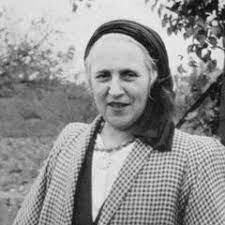
The book, The Reality of Being by Jeanne de Salzmann, is an unanticipated, very interesting, if somewhat unusual, addition to a growing number of books that attempt to define or are in some way about the Gurdjieff Work. This book was unanticipated because the author, Jeanne de Salzmann, passed on some 21 years ago and during her 101 years of life published very little. The book is of interest for many reasons, not the least of which is that de Salzmann had a long and close relationship with Mr. Gurdjieff. This relationship began with the meeting of Gurdjieff, de Salzmann and her husband, Alexander de Salzmann, in Tifflis in 1919. Thomas de Hartmann, who was Gurdjieff’s student and musical collaborator, arranged the initial meeting. Of that first meeting she noted, “The first impression of Gurdjieff was very strong, unforgettable. He had an expression I had never seen, and an intelligence, a force, that was different…a vision that could see everything.” A relationship was established that continued essentially uninterrupted for the next 30 years. De Salzmann was present during Gurdjieff’s search in Europe for a location to establish his Institute for the Harmonious Development of Man, the years at the Prieuré and finally the last years at 6 rue des Colonels-Renard in Paris. Having been a student and teacher of music and dancing, including time with Jacques Dalcroze, it was natural for her to assume a large role in Gurdjieff’s dance exercises commonly known as the “Movements.” The relationship with Gurdjieff grew through the years. “Before Gurdjieff died, he charged Mme. de Salzmann to live to be ‘over 100’ in order to establish his teaching. He left her all his rights with respect to his writings and the Movements, as well as the music that de Hartmann had composed with him.” In the years after Gurdjieff’s death, de Salzmann was instrumental in creating the framework of institutions that preserved and made available the teaching Gurdjieff brought to the world. It should also be noted that it is commonly believed de Salzmann’s second child, Michel (1923-2001), who upon her death in 1990 succeeded his mother as head of The Gurdjieff Foundation, had Gurdjieff as his father.
The unusual nature of the book quickly becomes apparent. The book contains a forward, an introduction and an ending biographical note, but primarily consists of extractions from de Salzmann’s journals. The journal extractions give the book a flavor quite unlike any other Work book. The time period of the journals is not directly stated, but it is implied to be from the early 1950’s on. There is an organization of the material primarily by “themes.” Material is not chronologically ordered though it is stated that the first four chapters are generally from the journals of the 1950’s. The exact origin of the material we are presented with is not entirely clear, but apparently these writings have come out of de Salzmann’s personal experiences and ponderings of the Work while in the Work. There is not the sense that these are Gurdjieff’s teachings in de Salzmann’s words, but rather the lived inner experience of the teaching. As would be expected, the experiences, thoughts and understandings of the journals are her personal thoughts, experiences and understandings. Though there cannot be certainty as to the degree, it does appear, as is stated, the extractions have been edited by “a small group of Jeanne de Salzmann’s friends and followers.” As the original journals—with the exception of one snippet—are unpublished, the extent of editing is unknown. The sense is that the editing, perhaps to make the writings somewhat less personal and more objectified as well as slightly more “lecture-like,” may have created at times, a certain awkwardness to an already difficult text.
The journal extractions consist of 140 monographs, each generally a few pages long and titled as to their general content. The writing is often quite detailed and of considerable density. A typical example: 15. Hypnotized by my Mind, “An inattentive mind is filled with thoughts. In a passive state it is constantly creating images and applying them to what I observe. The images provoke pleasure or pain, which is recorded in my memory, and illusions form around desires for satisfaction. In observing from a fixed vantage point, this mind creates a kind of separation, an opposition, a judge that reacts to everything with a preconception based on what has been learned.” The writing, in this case an apt description of the functioning of the dualistic, formatory mind, can at times go into “wordy” detail and thus become difficult to follow. There can be a mental glazing over if much of this material is read at one sitting. Though the book is a bit “wordy” and repetitive of subject matter, some of the monographs are rich and beautiful in their depth of understanding. They penetrate subjects, such as sensation, that have been presented only in limited ways outside of oral transmission. 99. Life is in me “In the beginning, sensation is almost the only instrument for self-knowledge. It can give a power to watch over many things and to repeat experiences that we can identify. This creates an inner world. Later, consciousness will have to become deeper, more interior. Yet the impulse to look into the depth of oneself is an indispensable step in the evolution of consciousness. Nothing is either certain or pure without this.” These writings are not for those with little understanding and experience in the Work.
Beyond wordiness and repetition of ideas, there could well be a more serious issue with giving such detailed descriptions. The Work is a work of self-exploration and self-transformation. As work is done, there is to be self-observation while in a state of self-remembering. Clearly de Salzmann did a tremendous amount of work on herself and gained a great deal of knowledge—self-knowledge. That said, it is questionable if it is advantageous to make such material available to all levels of students in the Work, as well as the general public. Gurdjieff gave us the basic ideas, such as the function of the formatory mind. It is a student’s work to verify this, as de Salzmann did. In this way, the teaching comes alive and understanding in its true sense, that is, the resultant of being and self-knowledge, come to be. Further, de Salzmann is not able to clarify questions of her experiences and ponderings that might arise from the readings. She may well have gained a deeper understanding over the ensuing years and perhaps didn’t journal them. Does anyone correct or revise their journals? Personal journals typically represent what is experienced and understood at a particular point in time. It would seem far better that students not be given such detailed descriptions based upon another’s personal experience. Self-exploration should be just that—one’s personal work done in conjunction with a teacher and group.
The editors write “Like every experiential account, the inner journey Mme. de Salzmann describes can really be understood only to the extent the reader himself can live the experience…” These words in the forward are absolutely true; and if true, that is, if a reader can already understand that which is written, what purpose does the book serve? Conversely, if the reader cannot understand what is written, what purpose does the book serve? “ The answer given by the editors “… each person reading or hearing these texts will be able to recognize what he or she already knows and, perhaps more important what he or she does not know, thereby opening to a sense of the unknown that Mme.de Salzmann would call the threshold to reality.” To experience, see and acknowledge what one does not know is very important. However, to read something one cannot understand serves little purpose. The editors’ rather thin justification would seem more rationale than purpose. The Work is a great adventure of self-exploration and self-transformation and in and of itself provides the student with more than enough “sense of the unknown.” There would seem to be no need or reason to read and not understand a teacher’s personal experiences and ponderings. All of this brings up what is really the essential question: was this material intended by de Salzmann to be published? The editor’s answer is that they believe so. They give a remark de Salzmann made at age 91, “I am writing a book on how to be in life, on a path to take in order to live on two levels.” The editors go on to say “When she died 10 years later, she left her note books intact, carefully preserved. To those closest to her, this was a clear sign of the legacy she intended for this material: to help complete Gurdjieff’s writings on a clear vision of reality…” Thus, on the basis of a remark that could well be taken either metaphorically or was referring to completely different material and the fact she didn’t destroy her notebooks, the material is published “to complete Gurdjieff’s writings.” Perhaps the editor’s deeper purpose is revealed at the website, the address of which is included in the book. On the website there is offered an “approach to the book” such as “Reading the texts aloud and slowly in small groups.” “Limiting the amount read at each meeting to only one text…” “Following the reading with a discussion and exchange on the participants’ experience and questions.” It seems that there is a clear intention to incorporate and use this material as part of the Work.
While one may argue that some of the decisions taken by de Salzmann in the course of 40 years after Gurdjieff’s death may not have been correct (the edited version of the First Series comes to mind), there is really no question that de Salzmann worked diligently on all three lines of the Work and came to a very high level of understanding. That said, the material in the book does not appear to be written in a way that was intended to be presented to the general public or to present the Work as a teacher’s record of personal experience for future students. The editor’s claim that de Salzmann wanted and/or intended that this material be published and used as an extension and completion of Gurdjieff’s writings is questionable. Can it be accepted that the person responsible for the publication of Gurdjieff’s writings couldn’t publish her own or at the least give instructions in this regard? Shall there now be a “skipping” over of Gurdjieff’s legominism, All and Everything, and Ouspensky’s In Search of the Miraculous to begin the study of a new book containing complex writings and material that may never have been intended for publication or teaching? As to the value of this material as part of the teaching and to further complete the written record, does this material simplify or complexify the Work? C. S. Nott asked Gurdjieff, “What about people who have never met you…How will they be able to understand Beelzebub’s Tales?” Gurdjieff’s reply must have shocked Nott, “Perhaps will understand better than many always around me…I not wish people to be identified with me, I wish them identified with my ideas. Many who never meet me, simple people, will understand my book.”
—Richard Myers— http://www.growingchoongary.com
- When I met Jeanne de Salzmann The Reality of Being p.1.
- Before Gurdjieff died de Salzmann p.299.
- This book was de Salzmann p.xviii.
- An attentive mind de Salzmann p.34.
- In the beginning de Salzmann p.210.
- Like every experiential de Salzmannp.xviii.
- I am writing de Salzmann p.xvi.
- Reading the texts www.realityofbeing.org/approach.html
- What about people C.S. Nott Further Teachings of Gurdjieff : Journey Through This World p.77.
 Open to Openness