
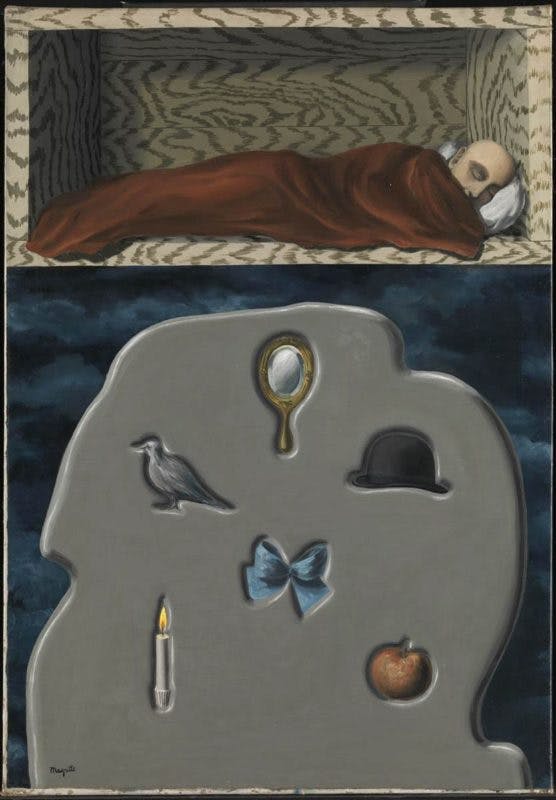
The Reckless Sleeper by Rene Magritte
A look at western exploration and ideas on the hidden consciousness of man
The Subconscious, Unconscious and Beyond
“We must close our eyes and invoke a new manner of seeing, a wakefulness that is the birthright of us all, though few put it to use.”
Plotinus
Mr. Gurdjieff at the beginning of his First Series in the chapter The Arousing of Thought gives his readers a warning “…I shall expound my thoughts intentionally in such sequence and with such “logical confrontation,” that the essence of certain real notions may of themselves automatically, so to say, go from this “waking consciousness”—which most people in their ignorance mistake for the real consciousness, but which I affirm and experimentally prove is the fictitious one—into what you call the subconscious, which ought to be in my opinion the real human consciousness…” (emphasis added)[1] While many issues are raised in this statement, likely the most bold is that a human being’s real consciousness is what is commonly called the subconscious and is also often called and considered by some as the unconscious. The state that life is typically lived in, is what Gurdjieff and others call the “waking consciousness” to differentiate it from the passive state or physiological sleep. This state, the waking state, is by his reckoning a “fictitious consciousness.” Is the subconscious the same as the unconscious? Is this concept of the subconscious as man’s true consciousness a unique idea? How was the subconscious seen in the other days and how is it currently looked upon? How has the subconscious been explored in the past? How can we explore the subconscious? Did Sigmund Freud, as he essentially claimed, “discover” the subconscious?
And as to the first question posed: the words unconscious and subconscious have often been used interchangeably, though perhaps not precisely identical in meaning. Craig Miller M.D. of Harvard Health Publications writes of the issue today, “As a general rule, then, in most of the professional literature where mental functioning is concerned (including not just psychoanalysis, but also psychiatry, psychology, and neuroscience, among others), writers—like Freud—tend to use the word “unconscious” rather than “subconscious.” Although the word “subconscious” continues to appear in the lay literature, it is rarely defined carefully and may or may not be synonymous with “unconscious.”[2] Freud used both terms inter-changeably eventually settling for the most part on unconscious. Unfortunately, both of the words are problematic as they carry many associations. The use of the term “unconscious” preceded the term “subconscious,” which represents an anglicized version of the French subconscient said to be coined by the psychologist Pierre Janet (1859-1947). The word unconscious has more resonance with the word nonconscious, that is, something without consciousness, such as a rock lying where nature has taken it. Or perhaps as an automatic function of the body such as the absorption of food and water in the digestive track. Such actions that occur at a cellular, molecular, mechanical level happen outside both awareness and a human being’s ability to directly influence the activities, here word unconscious seems appropriate. The word subconscious seems a better description of the consciousness that is the subject of this article, but the prefix “sub” has a bit of degraded sense to it, of a consciousness of a lower or inferior state, a lesser consciousness, a consciousness which underlies the waking state in one form or another. So, it seems we don’t have an “exact language,” a completely satisfactory term with which to label this consciousness; therefore, due to the fact that both terms are used and for the most part interchangeably, and both will show up in quotations by various historical figures, they will be taken for the purpose of this article to have general interchangeability. If there is a specific change of meaning, it shall be so noted. As subconscious is the term Gurdjieff used, the author will use that term in the body of the article, unless specifically referring to a quote where in the term unconscious is used. Subconscious will be used in the sense that there is a discrete consciousness that is typically not awared in the course of ordinary life, but that given the correct conditions or other external manipulation, can come into awareness to varying degree.
Western exploration of the subconscious
As we begin our exploration, let us put to rest the question posed regarding the oft asserted Freudian flag of discovery, planted in the “subsoil of consciousness.” It is quite clear that no one in particular “discovered” the subconscious, and as Wolfgang Goethe wrote, “…What does discovery mean, and who can say he has discovered this or that?…it is pure idiocy to brag about priority; for it is simply unconscious conceit, not to admit frankly one is a plagiarist.” In the West the pathway of this particular, and ongoing, plagiarism began at the dawn of civilization. Perhaps Egypt, as we know the Egyptians valued divination and dream interpretation. The prophets of the Old Testament foretelling the future in dreams and visions. Ancient Greece, in the shadowy recesses of Plato’s cave, Plotinus’s “new manner of seeing,” Aristotle’s understanding of dreams. And later St Augustine, “Great is the power of memory… a spreading limitless room within me…”, St Thomas Aquinas, “I do not observe my soul apart from its acts. There are thus processes in the soul of which we are not immediately aware.” [3] And many, many others that had come to some understanding of, or at least sense that there existed, another consciousness in man—a consciousness that functions at a level of which we are not typically aware. Regarding pre-Freudian philosophical underpinnings, of what was to become a more tangible, “scientific” exploration of the subconscious, there were many. Setting the stage for Freud and others, The German Philosopher Gottfried Leibniz (1646-1716) wrote, “There are hundreds of marks that force us to judge that there is at every moment an infinity of perceptions in us, unaccompanied by awareness and unaccompanied by reflection; that is, an infinity of changes in the soul itself of which we are not aware.”[4] Many others followed Leibniz and in the West, “…the general conception of unconscious mental processes was conceivable (in post-Cartesian Europe) around 1700, topical around 1800, and fashionable around 1870-1880… many special applications of the idea had been systematically developed from 1800 onward.”[5]
Hypnosis and the subconscious
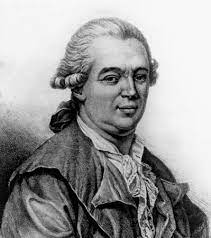
It seems that the 18th and particularly the 19th centuries in the West were the time where the subconscious “mind” began to move from being of primary interest to philosophers to being of significant interest to both the medical and philosophical community. We begin to see a move toward a more empirical exploration of the subconsciousness. Franz Mesmer (1734 -1815) is credited with developing the foundation of modern hypnotism. Mesmer felt that by manipulating the magnetic field of the body, what he called “animal magnetism” or more specifically the “magnetic fluid,” certain cures to what were primarily but not limited to, mental illness could be realized. To Mesmer, much as the tides were affected by the moons gravitational force per the theory of Sir Isaac Newton, so could the flow of magnetic energy be altered to a positive result. Thus, he believed magnetic fields of the human body could be manipulated in ways to provide relief of certain disorders. While it seems clear that his methodology involved what we today call hypnosis it also involved, at least in intent, the manipulation of the energy within and around the human body. According to Gurdjieff, Mesmer “…once happened to notice clearly during certain of his experiments the real duality of consciousness in beings like himself.”[6] Mesmer began his practice in Vienna but moved to Paris escaping scandal related to certain patients, as what had begun as a typical medical practice was transformed into something of a cult. In Paris, he became quite rich and his practice a phenomenon, complete with gossip and sexual innuendo, mass treatments; and in 1782, became the subject of a commission appointed by King Louis the XlV. The commission consisting of scientific luminaries of the day, including Benjamin Franklin who at that time was the US ambassador to France. The commission concluded that his devices and cures based on his theory of animal magnetism were simply a ruse and that his patients were essentially curing themselves because they believed in his power and knowledge, a cure by what today would be called the placebo effect. The commission’s findings essentially finished Mesmer’s career and he faded in to a disreputable obscurity. Though not before giving his name to both the phenomenon of mesmerism, what was later to be called hypnotism and also to the word mesmerize, which is used in the sense of entrancing and spellbinding a person.
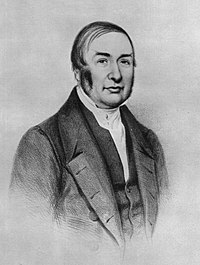
Interest in the phenomena of mesmerism did not end with the commission’s refutation of the animal magnetism theory advanced by Mesmer. Initially, the act of hypnotizing people became more of a carnival show rather than a part of medicine. In 1841 Charles Lafontaine was giving a demonstration, in Manchester England of the operation of animal magnetism. One of the attendees was James Braid, a well-respected Scottish surgeon and gentlemen scientist who was among those invited on stage to examine Lafontaine’s mesmerized participants. After several other demonstrations, Braid was convinced that there was something worth exploring further for possible use in his medical practice. Braid very quickly rejected the theory of animal magnetism and also rejected the supposition that an outside agent was causal in the mesmerized experience or what he eventually began to call the hypnotized state (from Hypnos, the Greek God of sleep). He succinctly laid out the various theories of his day, including his own. “The various theories at present entertained regarding the phenomena of mesmerism may be arranged thus: First, those who believe them to be owing entirely to a system of collusion and delusion; and a great majority of society may be ranked under this head. Second, those who believe them to be real phenomena, but produced solely by imagination, sympathy, and imitation. Third, the animal magnetists, or those who believe in some magnetic medium set in motion as the exciting cause of the mesmeric phenomena. Fourth, those who have adopted my views, that the phenomena are solely attributable to a peculiar physiological state of the brain and the spinal cord.”[7]
Gurdjieff writes that the hypnotic state is possible only because after the destruction of Atlantis, the human psyche “…began to be divided in two and…two entirely different consciousnesses having nothing in common with each other were gradually formed…the first which was called by them simply ‘consciousness’ and the second…called ‘subconsciousness.’”[8]

With Braid came the French neurologist Jean Martin Charcot (1825-1893), who used hypnosis primarily in exploring the disorder of what was called Hysteria. Charcot, who worked with and described several neurological diseases, came to believe that hysteria was both of physiological and psychological origins, that traumatic injuries, often forgotten, eventually resulted in psychologically induced symptoms. Additionally, he believed that only hysterics were susceptible to hypnosis in that the ability to be hypnotized was a symptom of hysteria, but unlike many he believed hysteria, though primarily affecting women, was not limited to women.
It is interesting that the “disorder” named hysteria seemed to be a focus of much of science, psychology and medicine in the 18th and 19th centuries, also continuing into the 20th. Hysteria, for the most part, is no longer considered a distinct syndrome. Nonetheless, for abnormal behavior for which there is no organic basis, but rather is due (or thought to be due) to emotional distress or some other psychological cause, the term is still in some use, particularly outside the United States.
Thought at one time to be restricted to females, the cause was sought in parts of the human physiology that were unique to the female anatomy. Thus, one of the most common hypothesis for the cause of this disorder was something called a wandering womb or uterus. This theory of uterine displacement dates at least to ancient Greece and probably Egypt and was thought to be the cause of hysteria as well as many other female disorders. As to hysteria in the 19th century “…Although this disorder expressed itself differently in each patient, most suffered a combination of physical and psychological symptoms, which could include delirium, paralysis, rigidity and contraction of muscles, blindness, inability to speak, loss of feeling, vomiting, hemorrhaging, seizures, joint deformity and distended abdomens. Many contemporary [of Charcot] physicians accused the hysterical patients of malingering and fraud, but Charcot was convinced that the patients believed that their symptoms were real, and that the physical symptoms were indicative of a genuine psychological problem.”[9]
Charcot often replaced traditional hospital rounds at Salpêtrière, the Paris gunpowder factory turned asylum, turned hospital at which he worked, with clinical demonstrations and patient interviews in the hospital amphitheater. He would hypnotize his female patients and proceed to have them demonstrate their symptoms to an enraptured male audience. He insisted that hysterical fits followed four clearly defined states—1) epileptoid fits, 2) the period of contortions and grand movements, 3) passionate attitudes, and 4) final delirium. The method that Charcot devised for relieving the symptoms of hysteria was not hypnosis, but pressing on zones of the patient’s body that he identified as “hysterogenic zones.” In women, one of these hysterogenic zones was on the lower belly, near the uterus. Perhaps there is some resonance with acupressure, perhaps not.
It should be mentioned that Gurdjieff said of Brade [sic] that he, “had unmistakable signs of the properties of a Hasnamuss…” and that, “Charcot, had the typical properties of a mama’s darling.” And that terrestrial types of this kind, particularly the contemporary ones can never discover anything quite new.”[10] Gurdjieff writes of three methods of inducing the hypnotic state. The first being the use of the hypnotists’ hanbledzion, the blood of the kesdjan (astral) body, but as he wrote, “…I had to produce this said state in very many three-brained beings there for their personal benefit, and this means proved very harmful for my being existence…” It requires the expenditure of hanbledzion to induce and bring the patient to the hypnotic state and allow the subconscious of the patient to come to the surface. A second method discovered by the Italian abbot, Pedrini and the doctor, Bambini, “…by means of which method… certain of them can…be brought into such a… ‘concentrated state’ by gazing at a shining brilliant object.” Gurdjieff degrades this method and given the likely fictional names of its discoverers, seems to consider it as “child’s play” which works on only certain people. The third method, which he apparently came to use and invented, involves “quickly changing the…‘difference-of-the-filling-of-the-blood-vessels’…by means of a certain hindering of the movement of the blood in certain blood vessels.”[11]
Many well-known neurologists and psychologists of the late 1800’s were influenced directly by Charcot, including Sigmund Freud, Joseph Babinski, Pierre Janet, Pierre Marie, Albert Londe, Charles-Joseph Bouchard, Georges Gilles de la Tourette, Alfred Binet, Jean Leguirec and the American, William James. These men were either students of Charcot or his contemporaries and came to the Salpêtrière to attend his lectures and observe his work.
Freud, Jung and James
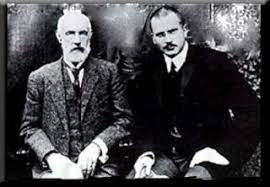
The “discovery” of the subconscious is commonly, and as noted earlier, erroneously associated with Sigmund Freud (1856-1939). Though, without question Freud, more than anyone, popularized and brought to light the importance of the subconscious as a significant aspect of the human psyche. Freud received his MD from the University of Vienna in 1881and entered into private medical practice. However, in Oct 1885 he went to Paris on a fellowship to study under Charcot where he was enthralled by Charcot’s abilities and thought he was a “master showman.” He said Charcot, “imitated the symptoms of various neurological diseases, engaged patients in dramatic dialogue, and had them wear hats with long feathers whose different vibrations illustrated different kinds of tremors.”[12] Freud was particularly interested in Charcot’s treatment of hysteria and his use of hypnosis. After Freud returned to Vienna he began to develop his private practice along the lines that Charcot used in Paris. The great goal of several of Charcot’s students was to determine the cause of hysteria. In this quest Freud, working with his collaborator Joseph Breuer, arrived at the conclusion that hysteria, which they called a “double consciousness,” was caused psychological trauma, though not an underlying organic cause as proposed by Charcot. In summation, Freud and Breuer said “…that hysterics suffer mainly from reminiscences.” From these conclusions by the mid1890’s Freud and Breuer determined that the symptoms could be alleviated by what they called abreaction and catharsis and what Freud later called psycho-analysis. It should be mentioned that Pierre Janet, also a student of Charcot, came to very similar conclusions at about the same time.
Freud, using hypnosis as well as other more psycho-analytical methods that he developed, and following the road of reminiscences with his patients, began to come to the traumatic event he felt was at the base of the hysteria and that event that was rooted in sexual trauma. Sexual assault, abuse and incest at an early age were uncovered beneath the typically relatively minor sexual event that had triggered the episode of hysteria. He came to the conclusion, “…that the bottom of every case of hysteria there are one or more occurrences of premature sexual experience…”[13] Given this hypothesis Freud faced a dilemma. The hysterical disorder was so common that taken to logical conclusion, sexual abuse of children, particularly females, would be endemic. And not just among the working class where he first began his studies, but also among the respected upper classes of Viennese society. The Victorian age of sexual repression and taboo being the societal norm, it seems Freud may have made a political decision and backed away from his sexual trauma theory. Or possibly he saw issues with his methodology. According to P. D. Uspenski, Freud’s method, “… consisted in hypnotizing the patient and putting questions to her about herself…this method can lead to nothing because…either the hypnotiser without knowing it suggests the answers…or the hypnotised subject invents fantastic theories and tells imaginary tales.”[14] Freud did give up hypnosis and instead began to more deeply develop a “free association” based psychoanalysis as a substitute. Still very much tied to sexuality, but more so to his theories that, though certainly unique and unusual, were not quite as politically charged. Thus, we see his work with dreams, his work with psycho-sexual stages of human development and in general work with sexual fantasies and desires not always associated with traumatic experiences. Freud eventually stated that his earlier patient’s stories of sexual abuse were simply fabrications. That there was a sexual base to the condition of hysteria in women was an accepted theory, thus one of the treatment methods was the inducing of what was at the time called a paroxysm or what is now called an orgasm, first by use of the hands and later by vibrator. The vibrator was in fact invented to relieve the cramped fingers of the doctors and mid wives who performed this task as a medical procedure.
In his book The Interpretation of Dreams (1899), Freud states that there are three states of human consciousness: the conscious, the preconscious and the unconscious. For Freud the conscious state is synonymous with what we call the waking state, the preconscious is some kind of intermediate state that lurks just below the waking state containing stored knowledge and easily recoverable memories and can be awared if we direct our awareness to it. The unconscious that cannot be awared, except under special circumstances, contains our fears, desires, buried experiences, automatic functions. The primary goal of Freudian therapy would be to bring what is contained in the preconscious and unconscious to the awareness of the conscious (waking) state. By doing this, it is posited that a person can come to understand the base and origin of issues that affect their lives in a negative manner and by seeing these issues in proper perspective, can overcome them. Freud said, “The assertion that the symptoms disappear when one has made their unconscious connections conscious, has been borne out by all subsequent research, although the most extraordinary and unexpected complications have been met within its practical execution. Our therapy does its work by means of changing the unconscious into the conscious, and is effective only insofar as it has the opportunity of bringing about this transformation.”[15]
This of course is not at all what Gurdjieff was working toward; this is not evolution of consciousness. And though Gurdjieff did work with people and cured things like alcoholism and drug addiction, this was a side project to help the individual and to gain understanding of the human condition as well as a way to help finance his real work. Gurdjieff had a low opinion of psychoanalysis and called it a maleficent means to accomplish what true hypnosis could achieve.
One of Freud’s students and collaborators who later produced a contrasting vision of human consciousness was Carl G. Jung (1875-1961). While Jung, like Freud, believed that there were layers of consciousness and that the waking state consciousness was a thin surface layer, his view of the human psyche was at some variance. As to the unconscious Jung wrote, “Everything of which I know, but of which I am not at the moment thinking; everything of which I was once conscious but have now forgotten; everything perceived by my senses, but not noted by my conscious mind; everything which, involuntarily and without paying attention to it, I feel, think, remember, want, and do; all the future things that are taking shape in me and will sometime come to consciousness: all this is the content of the unconscious.”[16]
Jung believed in a personal unconscious, not varying greatly from Freud as noted above, but also believed that all humans were part of what he called the “collective unconscious” that is all of human experience is carried in an unconscious that underpins and surrounds the personal unconscious. Jung wrote, “The collective unconscious is a part of the psyche, which can be negatively distinguished from a personal unconscious by the fact that it does not, like the latter, owe its existence to personal experience and consequently is not a personal acquisition…the contents of the collective unconscious have never been in consciousness, and therefore have never been individually acquired, but owe their existence exclusively to heredity. Whereas the personal unconscious consists for the most part of complexes, the content of the collective unconscious is made up essentially of archetypes.”[17]
Jung felt that in addition to our immediate consciousness, that is, our waking state and personal unconscious, there exists a second “psychic system” that is universal, collective, impersonal and identical in all persons. The archetypes that exist are pre-existing forms that make humans, humans beings, and that have been acquired over the course of human existence. These pre-existing forms of being make up the archetypes, acquired by hereditary and are unique to the species. Jung came to this concept through his own experiences, what he called his inner images. How these images were come to is not explained, Jung’s images which began in 1913 and likely continued into the 1930’s with his self-exploration diminishing over time. The images both described in words and drawings are contained, after 1915, in the Red Book not made available for study until 2009. This concept of a collective unconscious was an extreme departure from Freud. While Jung felt basic human morality and civilization arose in individuals from the archetypes within all humans, Freud, as Jung, wrote, “…calls this opposing factor in consciousness the moral censor, and he looks on it as acquired through education and punishment. For him all morality is acquired and is imposed from without upon the individual. There is no help sought from within, for him the unconscious is like a Zoo in the heart of a great city, full of caged beasts.”[18] Perhaps Jung, unlike Freud, followed the suggestion of the Greek philosopher Plotinus to, “… close our eyes and invoke a new manner of seeing…”
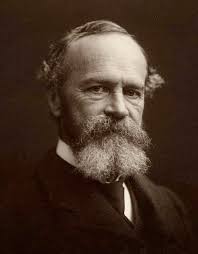
William James has been said to have been the Jean Martin Charcot of American Psychology, Charcot and James were contemporaries and indeed James did go to Salpêtrière and attended some of Charcot’s lectures they were quite different in their approach and interests. Born in 1842 the son of a Swedenborgian theologian, James, well-traveled and highly educated a philosopher and psychologist, was also trained as a medical doctor. He was to publish his seminal work, The Principles of Psychology in 1890. James was not a typical academic but more of an experiential scientist with a philosophic and religious/spiritual bent. For instance, he joined the Theosophical Society in 1882, a time before Blavatsky brought forth her teaching of the Secret Doctrine, a hybrid product of Western occult and Eastern mystical doctrine. James was interested in the exploration of physic phenomena, but not much interested in Theosophy’s evolving “World” teaching. He was one of the founders of The American Society of Psychical Research in 1885. He was in his life and philosophy suspended between revelation and reason.
Regarding the subconscious, when The Principles of Psychology was written, James was somewhat agnostic as to whether there existed a separate unconscious mind. In exploring this subject James addressed ten justifications for the concept of the unconscious mind, each of which he refuted. Further, James an explorer and not a dogmatist says, “‘The Psychologist’s Fallacy.’ The great snare of the psychologist is the confusion of his own standpoint with that of the mental fact about which he is making his report…Another variety of…fallacy is the assumption that the mental state studied must be conscious of itself as the psychologist is conscious of it.”[19]
Regarding the subjects of hysteria under hypnosis, James wrote, “It must be admitted, therefore, that in certain persons, at least, the total possible consciousness may be split into parts which co-exist but mutually ignore each other, and share the objects of knowledge between them.”[20] The use of the word split is very similar to how Gurdjieff explains the typical human condition. The thinking of the time was that the splitting into separate consciousness was possible only where there was abnormal weakness. Rather, it seems in what were called hysterics there is a great lessening of the gradient/division between the waking state and the subconscious, and under hypnosis little to no resistance to bringing the subconscious to the surface to be exposed and explored.
James did accept that other states of consciousness existed. From his own experiences with nitrous oxide in the 1880’s he came to, “One conclusion was forced upon my mind…and… its truth has ever since remained unshaken…our normal waking consciousness, rational consciousness as we call it, is but one special type of consciousness, whilst all about it, parted from it by the filmiest of screens, there lie potential forms of consciousness entirely different.”[21]
In 1909 shortly before his death in 1910, James went to Clark University to hear Freud give his first American presentation of psychoanalysis. Jung was also present as he had not yet broken with Freud. He apparently had a good impression of Jung as did Jung of him. Of Freud he felt his work of great value but wrote in a letter, “…but I confess that he made on me personally the impression of a man obsessed with fixed ideas. I can make nothing in my own case with his dream theories, and obviously ‘symbolism’ is a most dangerous method. A newspaper report of the Congress said that Freud had condemned the American religious therapy (which has such extensive results) as very ‘dangerous’ because so ‘unscientific.’ Bah!” [22]
The door opens and the door shuts, drugs and the subconscious
We have already examined from an historical perspective, hypnosis, a process producing a state which even today is not really understood but is still used in modern psychology mainly but not exclusively as a method behavioral modification. The hypnotic process today, while not considered a therapy, is deemed useful in smoking cession, weight loss, relaxation, depression, pain control and even for irritable bowel. Its use seems to be on the ascendency as options to other more corrosive treatments are sought by certain patients. There is no record of Gurdjieff having used hypnosis directly as a tool with which to effect any transformation of a lasting nature on his students. While hypnosis may have some external benefits when used as it is currently, it has no apparent use in achieving a growth of being. That said, it seems Gurdjieff may well have used it to demonstrate the subconscious state—that is as a teaching tool. The experiment in dividing essence from personality as recorded in Search has very much the taste of being induced by hypnosis.
Certain drugs also have the ability to bring the subconscious into the awareness of the individual or perhaps the individual into the awareness of the subconscious. James notes his and others use of ether, chloroform and nitrous oxide as having varying degrees of efficacy. Uspenski states that in hypnotism, “narcotics are used far more often than is thought…first for the weakening of resistance to hypnotic action, and second for the strengthening of the capacity to hypnotise.”[23] He states that the use of morphia and cocaine are used by professional hypnotists, and that weak doses of chloroform increase the susceptibility of one to be hypnotized. Freud in 1884 began experimenting with cocaine as part of his medical practice. He wrote a paper titled “Uber Coca” extolling its virtues and became thoroughly addicted to a drug he initially claimed was not addictive. Cocaine, at the time, was legal and readily available. His cocaine use almost certainly had some impact on his ideas and work, and was to last until 1896. This was a period when he was using hypnosis.
Drugs have been used for thousands of years in religious rites and for more mundane purposes. It has long been known that the ingestion of certain plants and extracts of plants had definite effects on humans. Some were deadly poisonous, some cured disease and a few, which Gurdjieff called “Polormedekhtian,” had what Gurdjieff said was the ability to transform, “… all those active elements which primarily arise from the transformations of the substances of various cosmic concentrations belonging to other ‘Solar-systems’ of our common Megalocosmos.”[24]
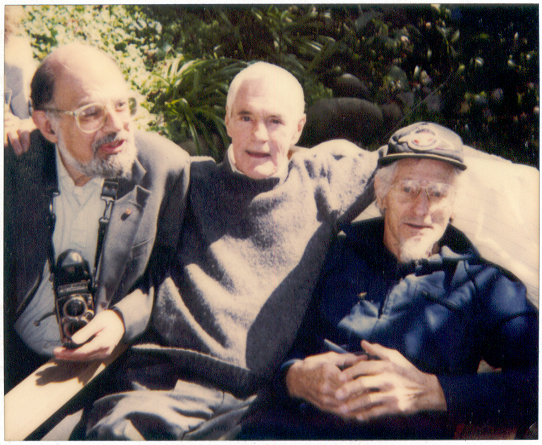
The 1960’s were a time when drug use, particularly some of the newer psychoactive synthetic or extracted drugs such as LSD, mescaline and psilocybin came into wide spread use and one could easily say wide spread abuse. The scientific and medical/psychological community which saw potential uses of these drugs in various therapies lost control and the recreational use of the what were known as psychedelic drugs became a part of what was the counter culture, the general culture, in reaction, making them illegal both for personal use and essentially impossible to use for research. Prior to their illegality and in keeping with a long tradition of using themselves as guinea pigs; scientists, psychologists and others initially used and conducted research with these substances. Carlos Castaneda, Timothy Leary, Richard Alpert and John Lilly being a few of the better known “researchers.” Lilly a trained psychoanalyst received a medical education and basic scientific education at Cal Tech, he took LSD in the early 1960’s. Lilly said at the early stage of his first experience, “Every psychiatrist, every psychoanalyst should be forced to take LSD in order to know what is over here.”[25] This statement is remarkable for its truthful simplicity and also for its naivety. And yet, how can people help others in what Lilly called the subconscious space without any direct understanding of what it is? Lilly had many experiences, “I lived out many scenes of my childhood, happy ones, satisfying ones, playing with little playmates, being suckled by my mother…time reversed…,” he experienced his conception and birth.[26]
In 1954 Lilly had invented and used for about ten years prior to his first LSD experience what he called an isolation tank. The process of what became known as “sensory deprivation” wherein a person floats in a contained body of water, the water temperature equals body temperature, that contains enough Epsom salts to support the body without effort in total darkness and silence. How does the waking state consciousness work when deprived of virtually all external impressions? There is the blood coursing through the veins, the breath, the heart beat all suspended in a weightless space. What Lilly found was that, “One did not need external stimulation to stay awake…I went through dreamlike states, trancelike states, mystical states…I was totally intact, centered, and there…Some part of me always knew that I was suspended in water in a tank in the dark and in the silence.”[27] He later added LSD to the tank experience. Does the subconscious become dominate with certain drugs and or sensory deprivation? Is there a reversal of what we take to be our natural state which is this thin waking consciousness? Does the vast subconscious open to us as the waking state, the consensus consciousness, recedes until the drug is metabolized or the isolation session is over? With drugs this seems at times a drastic, almost violent shift. Lilly never seemed to be concerned about “coming back” he always did, others as he notes didn’t.
The latest craze in the use of drug induced “exploration” are the natural substances traditionally used by shamans in South America as a part of their religious rituals and consists a combination of two plants given the name Ayahuasca. It is also interesting that there is now a resurgence of interest in the medical/psychological uses of psychoactive drugs particularly psilocybin which is derived from certain mushrooms. The John Hopkins psilocybin research project started more than 15 years ago has shown some remarkable results as researchers, in a small double-blind study, reported that a substantial majority of people suffering cancer-related anxiety or depression found considerable relief for up to six months from a single large dose.
While certain drugs can open us to the subconscious they are temporary and often debilitating to the body, both physical and energy. So many people look to other gentler approaches and the most common likely is meditation. There are many well documented Eastern Meditation practices in the various Hindu and Buddhist traditions and these traditions have explored and documented descriptions of different levels of consciousness, this knowledge is and was acquired through various meditation or similar techniques, this knowledge is the fruit of many lifetimes. There have been many attempts to correlate and integrate Eastern teachings and meditations with Western Psychology. The value of this work is questionable, though it is very wide spread in the West. Jung in particular created this opening which many others have gone through and created hybrid therapies mixing Eastern and multiple Western methodologies, which work toward “results” for their patients. This hybrid of East and West was originally called Transpersonal Psychology and has influenced a fair number of psychological practitioners. Many today try to bring stability to the waking state by lightly tinkering with the subconscious, this to allow ordinary life to proceed in a socially acceptable manner, to be, if not happy at least mostly satisfied with and functional in ordinary life. In this work psychologists, Transpersonal and otherwise, have not been particularly successful; however, psychiatrists have achieved success beyond Freud’s wildest dreams.
Perhaps 50 years ago psychoanalysis, some changed from Freud’s days, was the treatment of choice in mild mental disorders, but in the 1950’s concurrently with the development of psychedelic drugs there was taking place the development of other drugs of a psychotropic nature, that is being capable of impacting the mind, emotions, and behavior. Drugs such as morphine and cocaine and later amphetamines were used to treat mental illness in the 1800’s and early 1900’s, but it was the development of Thorazine in 1954 which sent the world on a drug centered treatment binge. Thorazine had terrible side effects but was an effective anti-psychotic and its use began to empty the asylums. Psychiatrists and drug companies then went after “disorders” affecting the general society. Beginning with the tranquilizer, Miltown, moving to anti-anxiety drugs such as Valium (nick-named mother’s little helper) to anti-depressants like Prozac to bipolar drugs such as Abilify. It is believed that brain chemistry is linked to certain mental illness such as schizophrenia, depression and bipolar disorder. These psychotropic drugs initially used on only the most severe cases have become, in spite of serious side effects, ubiquitous in society. As psychedelic drugs have the possibility to open one to the subconscious these drugs have the ability to close us from the deeper parts of our consciousness. They flatten the emotions and deaden us to life, confining the user to the tiny “fictitious” waking state consciousness and even limiting experience within that narrow slice of consciousness.
Everyone’s peek into the subconscious, dreams

Dreams are such broad subject that this will be of necessity a brief overview. Dreams are a universal experience that may contain vivid, strange even otherworldly content and appear without effort while people are in a state of consciousness separate from the waking state, because of this they have often been given great significance. Dreams as an entrance to what is now called the subconscious mind go back to the beginning of recorded human history. Just about every culture has given significance to dreams and their interpretation. Often, they were seen as a means of communicating with higher beings. In Greek mythology, Morpheus was the God of dreams, his father, Hypnos, the God of sleep, his mother, Pasithea, the Goddess of relaxation. It was Morpheus’ task to deliver, via dreams, messages from the Gods to the mortal world. In the bible dreams and visions are intermingled in the Old Testament, dreams where in often direct instruction is given from the higher, also occur in the New Testament, though mostly limited to Joseph, in the Gospel of Mathew, his dreams directing him to take specific actions. Perhaps coincidentally his namesake, Joseph of ancient Israel, had prophetic dreams and was believed to have the ability to interpret dreams. After moving to Egypt, he became the Pharaoh’s assistant and number two in the rule of Egypt, this largely due to ability at divination and dream interpretation. Jesus does not appear to have had dreams, his connection with the higher beings of a more direct experience. Eastern culture and religion also puts much meaning into the images and actions that occur in the dream state.
Aristotle, not totally convinced of equality among men, wrote three detailed treatises on dreams. He did not believe dreams came from God, primarily because, “… the power of foreseeing the future and of having vivid dreams is found in persons of inferior type, which implies that God does not send their dreams.” And as to prophetic dreams, “… it is quite natural that commonplace persons should be those who have foresight [in dreams]. For the mind of such persons is not given to thinking, but, as it were, derelict, or totally vacant, and, when once set moving, is borne passively on in the direction taken by that which moves it.” Regarding the interpretation of dreams, “The most skillful interpreter of dreams is he who has the faculty of observing resemblances… But, speaking of ‘resemblances’, I mean that dream presentations are analogous to the forms reflected in water… if the motion in the water be great, the reflexion has no resemblance to its original, nor do the forms resemble the real objects. Skillful, indeed, would he be in interpreting …at a glance comprehend, the scattered and distorted fragments of such forms…Accordingly, in the other case also, in a similar way, some such thing as this [blurred image] is all that a dream amounts to…”[28]
Freud, in 1931 wrote in the forward to the third English edition to The Interpretation of dreams which had been first published in 1900, “… [this ed.] remains essentially unaltered. It contains, even according to my present judgment, the most valuable of all the discoveries it has been my good fortune to make. Insight such as this falls to one’s lot but once in a lifetime.”[29] One can see why James said he was, “…a man obsessed with fixed ideas.” One might add obsessed with his ideas. Freud fitted his work with dreams into his method of psychoanalysis. The writing down and analysis of dreams was a part of his methodology to bring the unconsciously bound neuroses that manifested as symptoms of the patient to the waking conscious and allow the light of the waking state to dissipate the symptoms. Freud famously wrote “…the interpretation of dreams is the via regia [royal road] to a knowledge of the unconscious element in our psychic life.”[30]
Freud felt all dreams were at base wish-fulfillments. While in many dreams this is obvious, very simply for example I am dreaming of drinking water I wake up and I am extremely thirsty. It was Freud’s “genius” to find the wish in even dreams which seem to be counter-wish-dreams and everything in between. He did this by using psychoanalytic techniques to begin to know his patient’s experiences, both repressed and otherwise to explain the content of the dream. As one looks at his methodology, his use of free association as a term to describe it seems quite right. While Freud claims that, “a new psychic material interposes itself between the dream-content and the results of our investigations: the latent dream-content, or dream-thoughts which are obtained only by our method.”[31] This seems somewhat speculative and questionable.
In reviewing Freud’s interpretation techniques, he seems to examine the latent dream content associatively, and works from the dream-thoughts of the dream, mentally associating its latent-content with events, one association after another as he re-creates the fabric of the dream all the way back to the point of its inception. While he says he avoids the failures of memory he inserts in its place the subjectivity of the analyst (either the dreamer or the professional) as to what is a meaningful association. But can the weakness of memory ever be surmounted? The patient still must recollect the dream in its details and there is of course no way to know the true content of the dream, particularly in its details. As Aristotle said, the dream interpreter looks at the dream as reflected in a pool of water and any movement distorts the image of the dream. It would seem any such method of interpretation by association is subjective, more art than science. Does the patient really remember the dream, does the patient alter details to please the analysist, does the patient not want endure embarrassment related to certain content, does the patient want to look “good,” and so forth?
The obvious issues of subjectivity of both the patient and his distorted recollections and of the Freudian analysist and his own associative method of a superficial objectivity but likely prejudicial, pre-conceived thought, seem too obvious to overlook. Freud found sex as the essential element of the dream—why? Could it be that he was looking for it? To Freud’s famous quote that “sometimes a cigar is just a cigar,” amusing, particularly because Freud was a cigar smoker, the question comes: so, when isn’t a cigar just a cigar and how can one know? The highly developed lower mind of Freud seems to have created a rational process to analyze dreams which come from the personal subconscious, but this process is seen this way only when examined by a mind that has no experience of real objectivity. Jung, who building on Freud’s base, developed a different theory of dreams wrote in 1961 near the time he died. “If you want to understand another person’s dream, you have to sacrifice your own predilections and suppress your prejudices…if you don’t make the effort to criticize your own standpoint and to admit its relativity, you will get neither the right information about, nor sufficient insight into, your analysand’s mind … one has to remind oneself again and again that in therapy it is more important for the patient to understand than for the analyst’s theoretical expectations to be satisfied.” [32]
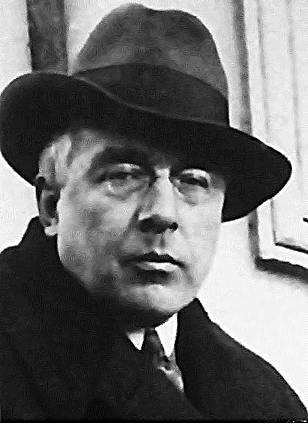
Uspenski in 1900 decided to give his interest in dreams, which had developed from early childhood, systematic observation. He began, as is commonly done, to write down his dreams. He came to the conclusion that, “Dreams do not stand observation; observations change them.”[33] Uspenski also had what he called the, “rather fantastic idea” of preserving his consciousness while in sleep. By attempting this he came to use and value what he called the half-dream state, a state created just as one falls asleep and as one is awakening. Uspenski felt that no study of dreams is possible without the half-dream state. Uspenski classified dreams in two basic categories “simple dreams” of which there are many types and are created from both external influences while in the sleep state or “…the refuse and used-up material of our psychic life.” These simple dreams are all that can be found in psychological literature, but there is another category of dreams that are very rare, “These dreams have their origins in the innermost recesses of life…can also disclose to us the mysteries of being, show the laws governing life, bring us in contact with higher forces.”[34] He says these, let’s call them “higher dreams” are assumed to be more common than they in fact are.
Uspenski, through his research, came to the conclusion that we not only dream continually while we are in sleep but dream continually in both the sleep and waking state. “We never cease to have dreams, though we are not aware of this.”[35] He also concluded that it is possible to observe dreams while we are awake. To do this, it necessary to achieve a state of “consciousness without thought.” The dreams begin to emerge when in this state of no thought. He came to a supposition that the waking state should be called “sleep plus waking state” the waking state merely “muffles” dreams it does not end them.
Gurdjieff did not think dreams of much value he said. “There are four kinds of sleep…If you dream while you sleep, you only sleep half.” He also said, “I spent fifteen years learning not to dream. One must not dream, one must do.”[36] Maurice Nicoll speaks of a conversation he had with Gurdjieff where he remarked that, “…most dreams come from Moving Centre, from haphazard connections taking place in Moving Centre…Instinct-Moving Centre…they have no meaning and so are of no importance.” Nicolle says that the Work teaches dreams can come from any of the centers including, “… centers we do not use…Higher Emotional and Higher Intellectual Centers.”[37] These are likely what Uspenski was referring to as very rare dreams, what we called higher dreams one might also call them teaching dreams. While the Work does not emphasize dreams and work with them directly the higher/teaching dreams should not be ignored as they can provide valuable insight.
The subconscious today
Every extension of knowledge arises from making conscious the unconscious—Nietzsche
The ideas of Freud and Jung still tint todays psychological thought regarding the subconscious. The essential structure, of a consciousness separate from the waking state, has not significantly changed. Older ideas, that emerged in the late 19th and early 20th century and details of the effect of the subconscious on the waking state or the relationship between the separate consciousnesses have been substantially tinkered with. “Over the years, empirical tests have not been kind to the specifics of the Freudian model, though in broad-brush terms the cognitive and social psychological evidence does support Freud as to the existence of unconscious mentation and its potential to impact judgments and behavior.”[38] Freud’s ideas, such as the Oedipus complex, castration complex, primal scene, penis envy and so forth, have lost relevance with today’s psychologists, though there remains a small cadre of practicing psychoanalysts. But at the same time, many of his ideas related to the subconscious, such as projection, denial, repression, sublimation have morphed into the colloquial language and imagery of society so we have the “Freudian slip,” guns as “phallic symbols,” big trucks as compensation for a small phallus and so on. Rightly or wrongly, these ideas seem to provide simple satisfying, off-the-cuff answers to some of the manifestations of the human psyche. Many of Jung’s ideas have, through transpersonal psychology, “pop” psychology and various new age ideas, also been taken into popular culture. We see the idea of a collective unconscious as a basic theme in many works science fiction, though typically an alien life form. Jung also was the first to classify people in terms of extroversion and introversion. This concept has deeply permeated society. His concept of synchronicity, similar to what Gurdjieff calls noticeable coincidences, though less wide spread or understood, has also had a lasting impact. Scientists have worked with brain function using tools unavailable to either Jung or Freud and have explored the architecture of the brain and its physical relationship to consciousness. There has been exploration of certain subconscious functions such as, memory, dreams as well as the hypnotic state. Certain pathologies and dysfunctions such as the various types of mental illness and the effect of various drugs have been examined as to location and effect in the brain. There has been determination of what part of the brain is active during the dream and hypnotic state, but little real understanding of why we dream, why we can enter a hypnotic state, how memory works. And with this, what the purpose (or if there is one) for the subconscious. It is believed the waking state is the primary consciousness of man.
Consciousness is regarded, by science as a function of the brain, there seems to be some agreement, in science, that consciousness is not a “thing” but rather a “process.” A process related to and originating in the structure and function of the brain. There has been an effort to provide details of the biological organization required for what is called the process of consciousness to arise, to locate and describe the neural correlates of consciousness. Emphasis seems to be, first to look at brain function, and then to fit it into the theory of a Neural Darwinism. This means a consciousness that is embodied in the sense that it cannot exist without a body or outside a body, a personal consciousness that in humans has arisen over time from a primary or fundamental consciousness to a higher order consciousness (the capability to be conscious of being conscious). That consciousness and its evolution is made manifest through a process of natural selection, that as the brain is selected, with minor changes accumulating over millions of years, consciousness sitting side saddle with the brain also evolves mechanically simply as a function of the evolving brain. There seems to be little empirical evidence for this theory of Neural Darwinism other than the general acceptance of natural selection as the only modality by which the complexity and diversity of biologic life can be explained. And put together with the theory that consciousness is a process of brain function, it therefore must also evolve through natural selection. A designed process or external consciousness in any form is rejected. The evidence of this specific Darwinian hypotheses causing the evolution of consciousness is much less compelling than exists for a general process of natural selection operating mechanically in the world at large. Can consciousness evolve unconsciously? The Neural Darwinists, say yes—Gurdjieff says no.
So, with neuro-science and modern psychology/psychiatry we have emphasis put on the waking state, to keep it healthy and within the bounds of acceptability in its manifestations and we have a belief in the mechanical evolution of consciousness. It is, as Gurdjieff would say, a topsy-turvey view of human awareness. Gurdjieff says there are four states of consciousness possible to human beings. We all have and are familiar with two, the sleep or passive state and the waking state. The waking state as Freud saw it and most people today take it, is the conscious state and a state of self-consciousness. Gurdjieff sees it as a fictional state unique to the planet Earth, a state in which, though we are physiologically awake, we exist in a kind of psychological sleep. The idea of the subconscious as the real and true consciousness of man appears to be a unique Gurdgieffian teaching. This seems, at first and from the point of view of the lower mind a very strange idea. Our experience with the subconscious through dreams, drugs, hypnosis or even meditation offers up a variety of impressions from beauty and ecstasy to disgust and horror. From a garbage dump of psychic trash to a path to the higher, gently wandering through a pristine and primal world of wonderous beauty and love. To bring this vast world, suddenly, permanently and in its entirety, to ordinary life would likely be a ticket to a place Gurdjieff often mentioned, the insane asylum. So, what does he mean with his statement regarding the subconscious as the real consciousness of man? What does the waking state lack that might be accessed in the subconscious?
The other two states possible for human beings are true self-consciousness and objective consciousness—people ordinarily experience these only in flashes. Self-consciousness, according to Gurdjieff, is the natural state of human existence, but due to unforseeingness that led to the implantation of the organ kundabuffer as well as the Atlantian catastrophe, we do not live in a natural state, but rather we take the fictional waking state as our natural consciousness and give to it attributes that it does not have, including true self-consciousness. Given that Gurdjieff says that the human consciousness split, it would seem apparent that there must be a reassembling, a unification of the two parts, that is, the waking state and the subconscious, to allow the natural state of self-consciousness to be what Gurdjieff calls: normal three brained beings. How is this to be? As Gurdjieff says, everything begins with the body. With this statement he is giving us a direction with which to begin correctly directed work, and also suggesting that the mending of the split will be a process and not likely a sudden awakening. Perhaps another statement Gurdjieff made gives us a sense of process. He said, “I spent 15 years learning not to dream…” What does this mean? Would one dream if the consciousness was unified, that is would a pre-Atlantian catastrophe consciousness dream? As it is we dream day and night, living primarily from one center, dominated by one center, connected to the formatory apparatus/mind. This creates a state of dualism, the yes-no, judgment and reaction duet of life that plays in a continuous loop. And there is the veil or, as James said, the “filmiest of barriers” separating the waking state from the subconscious—how to make the barrier more permeable, but not dissolved? Can we create a permeability that allows, as we work and follow a practice, the two consciousnesses to be gradually merged? Thus, coming to a fuller, growing awareness and eventually to a true and stable self-consciousness. In other words, can we become normal three-brained beings? And then there may be the beyond—objective consciousness, no-thing, nothing.
—Richard Myers— http://www.growingchoongary.com
[1] I shall expound my thoughts. G.I. Gurdjieff, All and Everything, First Series, 24.
[2] As a general rule. https://www.health.harvard.edu/blog/unconscious-or-subconscious-20100801255.
[3] No one in particular. L.L. Whyte, The Unconscious before Freud (London: Basic Books, 1960), preface, 79, 80.
[4] There are hundreds of marks. http://www.people.fas.harvard.edu/~asimmons/pdfs/PR%20Changing%20the%20Cartesian%20Mind.pdf, Alison Simmons, Changing the Cartesian Mind: Leibniz on Sensation, Representation and Consciousness, (The Philosophical Review, 110, no. 1 January, 2001), 11.
[5] General conception. Whyte, Unconscious, 168, 169.
[6] Once happened to notice. Gurdjieff, First Series, 561.
[7] The various theories. Maurice M. Tinterow (ED), Foundations of Hypnosis: From Mesmer to Freud (Springfield, IL: Charles C Thomas Pub. Ltd., 1970), 320.
[8] Began to be divided. Gurdjieff, First Series, 559.
[9] Although this disorder. Raymond E. Fancher, The Intelligence Men: Makers of the IQ Controversy (New York: W.W. Norton & Company, 1985), 53.
[10] Had unmistakable signs. Gurdjieff, First Series, 573.
[11] I had to produce. Gurdjieff, First Series, 578-580.
[12] Imitated the symptoms. (http://hugesponge.blogspot.com/2008/04/jean-martin-charcot-1825-1893.html), Raymond E. Fancher, Pioneers of Psychology, 349.
[13] The bottom of every case. https://www.amherst.edu/media/view/355811/original/Herman%2BHysteria%2BShare.pdf.
[14] Freud’s method. P. D. Ouspensky, A New Model of the Universe (New York: Alfred A. Knopf, 1961), 243.
[15] The assertion that the symptoms. Sigmund Freud: A General Introduction to Psychoanalysis (G. Stanley Hall, trans., EBook #38219] December 4, 2011) (Freud Eighteenth Lecture General Theory of Neuroses, Traumatic Fixation-The Unconscious), 326.
[16] Everything of which I know. Carl G. Jung, On the Nature of the Psyche (New York: Routledge Classics, 1969), 112.
[17] The collective unconscious. Carl G. Jung, Archetypes and the Collective Unconscious (Princeton, NJ: C.G. Jung Princeton University Press, 1990), 42.
[18] This opposing factor. C. G. Jung, Dream Psychology (London: Henry Frowde, Hodder, and Stoughton, 1920), 180.
[19] The Psychologist’s Fallacy. William James, The Principles of Psychology (Cambridge, MA: Harvard University Press 1983), 195-196.
[20] It must be admitted. James, Principles, 204.
[21] One conclusion. William James, The Varieties of Religious Experience (Harvard University, 1902) 133.
[22] But I confess. https://www.uky.edu/~eushe2/Pajares/JamesSimon1967.pdf.
[23] Narcotics are used. Ouspensky, New Model, 266.
[24] Active elements. Gurdjieff, First Series, 825.
[25] Every psychiatrist. John Lilly, M.D, The Center of the Cyclone (New York: Julian Press, 1972), 10.
[26] I lived out. Lilly, Cyclone, 12-13.
[27] One did not need. Lilly, Cyclone, 42.
[28] The most skillful. https://ebooks.adelaide.edu.au/a/aristotle/prophesy/.
[29] Remains essentially unaltered. Sigmund Freud, The Basic Writings of Sigmund Freud (New York: Random House, 1995), 149.
[30] Interpretation of Dreams. Freud, Basic Writings, 508.
[31] A new psychic material. Freud, Basic Writings, 287.
[32] If you want to understand. C. G. Jung Symbols and the Interpretation of Dreams 1961, In The Collected Works of C.G. Jung (Princeton, NJ: Princeton University Press, 1976), Vol. 18, Para. 505.
[33] Dreams do not stand. Ouspensky, New Model, 243.
[34] These dreams. Ouspensky, New Model, 261-262
[35] We never cease. Ouspensky, New Model, 263.
[36] Four kinds of sleep. William Patrick Patterson, Voices in the Dark (Fairfax, CA: Arete Communications, 2014) 68, 159.
[37] Most dreams. Maurice Nicoll, Psychological Commentaries on the Teaching of Gurdjieff & Ouspensky, Vol One (London: Vincent Stuart, 1964) 352-353.
[38] Over the years. (https://www.ncbi.nlm.nih.gov/pmc/articles/PMC2440575/).
 Open to Openness