
Darwin and His Theory, Then and Now
Darwinian Thought and the Fourth Way
“Thus, from the war of nature, from famine and death, the most exalted object which we are capable of conceiving, namely, the production of the higher animals, directly follows. There is grandeur in this view of life, with its several powers, having been originally breathed into a few forms or into one; and that, whilst this planet has gone cycling on according to the fixed law of gravity, from so simple a beginning endless forms most beautiful and most wonderful have been, and are being, evolved.”
Charles Darwin Concluding paragraph of On the Origin of Species. 1
Why would someone interested in the Fourth Way write an article about Charles Darwin? In the bicentenary of his birth there have already been scores of articles about Darwin, his theory and the ongoing battle between religion and science. The general sense of these articles is quite predictable. Scientifically oriented publications are unified in their unquestioning attitudes of the correctness of Darwin’s basic theory and what has ‘evolved’ since—currently known as Modern Synthesis. Within the scientific community, despite the gaps, questions and disagreements, no quarter can be given to public questioning of Darwinist belief. The religious and spiritual communities themselves are not united in their attitude toward Darwin’s ideas, excepting that the fundamentalists of various religions are in unalterable opposition. Within the general public, as well as students of the Work, there appears to be a general lack of detailed knowledge of Darwin, his theory, as well as Modern Synthesis. This article seeks in some small way to rectify this, while exploring the relationship of Fourth Way ideas to Darwinian thought and science in general. In today’s world there is science and there is religion and “never the twain shall meet.” It was not always thus, but the relatively narrow divide in Darwin’s day has eroded to become a gaping chasm. This expanding division can, in some significant measure, be attributed to Darwinian thought. Can the teachings of the Fourth Way, a ‘sacred science’, can bridge this chasm? That is, perhaps reconcile the sacred and the profane with a bridge created by the ‘wisdom’ of the East harmoniously blended with the ‘energy’ of the West?
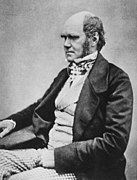
Charles Robert Darwin, born 200 years ago on 12 February 1809, is a man despised by some and revered by others, but he is one of the towering figures in modern science. Born into relative privilege, Darwin was an English naturalist and by all accounts a genial and gentle man. As a student of the natural world, Darwin pursued a multidisciplinary (biology, geology, anthropology), observational form of science popular among and suitable to the “gentleman scientists” of the 19th century. The effect of Darwin’s work on current mainstream scientific thought and theory in the life sciences is significant. It can be said that without Darwin’s basic evolutionary underpinning, there would be no life science as it is understood today.
In 1831, at the age of 22, Darwin embarked on a nearly five-year expedition aboard the ship HMS Beagle. Though much of this time was spent on land, the voyage took Darwin to the far reaches of the world, from England to South America, the Falklands, the Galapagos, Tahiti, New Zealand, Africa, back to South America and finally home to England. The primary purpose of the voyage was to conduct a hydrologic survey of the southern coast of South America, the Falkland and Galapagos Islands as well as other work in the Pacific, Tahiti and Australia. Darwin’s role on the voyage was to be a companion for the captain; he secondarily took on the role of the ship’s naturalist. Not particularly well qualified as a naturalist, he quickly took to this role. As a naturalist, Darwin explored, collected, cataloged and shipped back to England specimens of flora, fauna, minerals and fossils. On the voyage, observations were noted and questions began to arise that later, over many years, led Darwin to his theory of natural selection.
At Punta Alta on the eastern South American coast in an outcropping by the ocean, many fossils were found, including that of an extinct species of giant sloth. There were species of sloth living in South America, but they were smaller and tree dwellers and the extinct species was ground dwelling, far too large for life in the trees. Though only noted at the time, this was a possible example of natural selection by adaptation. In the Andes Mountains, at 7000 ft elevation and many miles from the sea, he found shells and fossils of marine species. This observation was an affirmation of geologist Charles Lyell’s idea of “uniformitarianism,” that geologic change is occurring in the present at about the same rate as change occurred in the past. Change for the most part occurs gradually rather than in catastrophic leaps. Catastrophic geologic change was commonly believed to have shaped the earth in both geology and religious teachings. Darwin felt that this same gradual pace of change was likely to occur as well in biological organisms. His observations of finches and mocking birds in the Galapagos Islands were an additional and contributing part of these important observations, but not as is commonly believed the defining one. The isolation of the islands and endemic animals offered Darwin the opportunity to see single species variegation from island to island. From these and other observations, he was able to extrapolate his theory on the origin of the species. “The process of theory building crept along at an almost glacial tempo.”2 There was no single moment of revelation or single observation but rather a process of review and study that over several decades led him to his ideas of evolution through the process of natural selection.
Darwin’s theory as put forth in his 1859 book On the Origin of Species can be summed up as follows: Small changes that prove to be in some way beneficial to an individual life form’s survival and/or its ability to reproduce have by a process of natural selection, incrementally, over long periods of time, provided the vast diversity of species that populate the earth.

“If such do occur (natural variations), can we doubt (remembering that many more individuals are born than can possibly survive) that individuals having any advantage, however slight, over others, would have the best chance of surviving and of procreating their kind? On the other hand, we may feel sure that any variation in the least degree injurious would be rigidly destroyed. This preservation of favorable variations and the rejection of injurious variations, I call Natural Selection. “3
In essence, Darwin believed that when an individual member of a species had a unique ability to adapt to, prosper and reproduce within their environment, this individual could pass this ability on to its offspring and thus gradually change the species. This process of natural, incremental change was the key to the changes in and the diversity of life on earth.
Some years later, in 1871 in his book The Descent of Man, he uniquely came to the idea of Sexual Selection. Darwin had briefly, in Origin of the Species, outlined this idea, but he fully developed it in Descent. While natural selection could explain certain things, there were substantial holes in the theory. Darwin could not help but see this, as it was orchestrated to him not in the Galapagos but in his home country. The male peacock with its massive display of tail feathers could not be explained by natural selection. Indeed natural selection alone would likely oppose such unwieldly and functionally useless feathers. As was apparent to Darwin, these feathers were related to the attraction of a breeding partner. Darwin, being a male in a male dominated society, was not pleased that the male of the species was, in this case, subservient to the female whims. He wrote in an 1860 letter to botanist Asa Gray, “The sight of a feather in a peacock’s tail, whenever I gaze at it, makes me sick.” Darwin, a man of his times, was sick because a male (a bird in this instance) goes so far as risking death by making himself visible and vulnerable to predation all in service to the requirements of attracting a female. As Darwin wrote in Origin of the Species, “…we may feel sure that any variation in the least degree injurious would be rigidly destroyed.” Is this quite right? For it would certainly seem that dragging around a bunch of three to four-foot feathers would certainly fall in that category, and yet they were not destroyed but apparently had gained an advantage. Thus, Darwin came up with and developed the theory of sexual selection. Today both natural and sexual selection are seen as drivers of evolution.
Genetics
Darwin did not know or understand the exact mechanism that was used by individuals of various species to pass their unique characteristics on to their progeny, though it was clear to him such a mechanism must exist. In viewing what man was able to do in a few generations of artificial selection in agricultural breeding, it was seen that such a process could and did exist in nature. In his book Variation of Plants and Animals Under Domestication, published in 1868, he postulated in his theory of Pangenesis that something called a Gemmule was shed by organs, carried in the blood stream and accumulated in the gametes and somehow caused the characteristics of species to be passed onto the next generation. This theory, though it gained fairly wide acceptance, was flawed and has long since been rejected. Darwin’s observations had given him insight into what was happening, but he had no knowledge of the genetic mechanism.
Gregor Mendel, an Augustinian priest and scientist of Moravian origin, through his work with thousands of pea plants, had explained basic heredity and published his work in 1866. Mendel’s paper received little attention until after his death. Darwin, who died in 1882, as well as much of the world, was unaware of Mendel’s work until it was rediscovered in 1900, providing the foundation of genetic science. However, it was not until 1953 when James Watson and Francis Crick determined the structure of Deoxyribose Nucleic Acid (DNA), that what had been broadly posited and wrongly explained by Darwin and had its external process of heredity detailed by Mendel and further detailed by geneticists in the first half of the 20th century, was now explained on a molecular level. DNA, being a replicating molecule containing discrete genetic information, is the basic mechanism whereby those characteristics that prove beneficial or inimical to individuals of various species’ survival upon reproduction are passed on to their progeny and succeeding generations. The mere existence of DNA and current knowledge of how little differentiations in genetic coding can produce huge changes in living organisms, as well as the commonality of DNA among all species, provides a plausible mechanism by which species could potentially transmute into new species. The process of transmutation is presumed by evolutionary theory to occur “naturally,” that is, by the naturally occurring forces and laws in the universe. It should be noted that over the last 150 years—though much scientific research supports Darwin’s belief in transmutation of species such as, the fossil record (though gaps exist), knowledge of genetic mutation and DNA, comparative anatomy as well as the observable fact of intra-species natural selection—this process has never been observed in “real time,” even in very simple organisms.
Darwin, with some trepidation but much conviction, had come to the conclusion that species were not fixed but mutable. A reasoned extension of this is that life was not designed—at least in the way that was, in his time, nearly universally accepted. Indeed, he believed that the process of natural selection acting on species became a process of transmutation of species. With this conviction, Darwin moved away from the wonderment of viewing life’s diversity as resultant of God as the designer, a God who had individually created all species. Though evolutionary thought was not unknown, belief in a designed world held sway in Darwin’s time and was elegantly put forth by William Paley in his book Natural Theology. Paley and most of science at the time believed that life in general and individual species and their myriad of intricate parts were far too complicated to not have been designed. In his famous rationale of design, Paley wrote the following:
“In crossing a heath, suppose I pitched my foot against a stone, and were asked how the stone came to be there; I might possibly answer, that, for anything I knew to the contrary, it had lain there forever: nor would it perhaps be very easy to show the absurdity of this answer. But suppose I had found a watch upon the ground, and it should be inquired how the watch happened to be in that place; I should hardly think of the answer I had before given, that for anything I knew, the watch might have always been there…. There must have existed, at some time, and at some place or other, an artificer or artificers, who formed [the watch] for the purpose which we find it actually to answer; who comprehended its construction, and designed its use…. Every indication of contrivance, every manifestation of design, which existed in the watch, exists in the works of nature; with the difference, on the side of nature, of being greater or more, and that in a degree which exceeds all computation.”
The beauty of Paley’s exposition is irrefutable. However, his basic supposition that life forms and their components are too complex not to have been individually designed is refutable. Darwin’s theory of natural selection provided the possibility and mechanism by which Paley’s theory of directed design could be refuted.
It is interesting to note that today Darwin’s basic fundamental concept, the process of natural selection as Darwin saw it, that is, as an adaptive process, is generally not considered to be the primary force in how changes in organisms occur. Given the limits of scientific technology and his use of observational science, it is understandable how he came to his theory of natural selection by adaptation. In fact, Darwin himself saw a process of mechanical, adaptive, undirected, natural selection as the “main but not exclusive means of modification” of species. 5 Natural selection by adaptation is observably provable and does occur within species. During the first part of this century, the incorporation of genetics and population biology into studies of evolution led to what is called Neo-Darwinism—a theory of evolution that recognized the importance of mutation and variation within a population. This idea was taken to extremes; for some scientists it was believed to have replaced Darwinian natural selection as the sole means of evolution. In general, however, natural selection became a process that altered the frequency of genes in a population and this defined evolution. Therefore, mutations that favored changes, and which subsequently proved beneficial to a species survival, propelled evolution. This point of view dominated scientific thought for many decades. Neo-Darwinism has given way to what today is called Modern Synthesis. This theory incorporates several mechanisms of evolution in addition to natural selection. One of these—random genetic drift—may be as important as natural selection. Modern Synthesis recognizes that characteristics are inherited as discrete entities called genes. Variation within a population is due to the presence of multiple alleles of a gene. Though mainstream science is mostly united in acceptance of modern synthesis as the general mechanism of evolution, there is considerable disagreement as to the degree that each mechanism causes changes in species, as well as the pace and frequency of the changes. Thus, Darwin is revered not so much for the specifics of his theory’s explanation of natural selection but that he provided a plausible theory of how life on earth in all its diversity evolved from an original life form. Additionally, it could be said that for a certain segment of evolutionary biologists, famously represented by Richard Dawkins, he appears to be revered because Darwin, to their thinking, wrecked the foundation of the concept of design and therefore the need of a designer.

Dawkins is probably the most famous populizer and proponent of evolutionary theory. A devout atheist, Dawkins is the highly intelligent author of many books on the subject, perhaps his most famous being The Selfish Gene. Dawkins takes Darwin’s theory of natural selection as it exists today, and while ensconced in and armored with accepted scientific thought, has come to the deep belief that there is not and could not possibly be a designer of and/or purpose for life. Dawkins follows life back in time to come to a dramatic conclusion: “A central truth about life on Earth…is that living organisms exist for the benefit of DNA rather than the other way around.” 7 The data contained in the DNA molecule replicates itself for the sake of replication using living organisms for this purpose. Because DNA replication is inherently an imperfect process, this, along with mutation and other naturally occurring processes creates small changes. These changes may or may not prove beneficial to the life form carrying the DNA. From these small incremental changes accumulated over vast periods of time, life as we today know it has come to exist. Thus, Dawkins follows the expanded Darwinian ideas of Modern Synthesis and belief in natural selection and other mechanisms as to how life has evolved from single ancestor into the myriad of complex forms on earth, and this is well within the mainstream of science. He departs science with an answer to the question of why there is life on earth by essentially saying there can be no why. Life on earth is an accidental occurrence that serves no purpose, either on earth or on a broader cosmic level. Dawkins does not think thatDNA has a conscious purpose but believes as “a central truth” that DNA just came to random existence and replicates itself because that is what DNA “does.” Basic laws of the physical universe randomly and without purpose have caused DNA to come into existence somewhere, either on earth or possibly on another planet. His belief is that life on earth likely began as an incident of naturally occurring molecules accreting into a replicating molecule that then “evolved” to DNA that somehow evolved into a self-replicating life form, and hence into all life on earth. This belief is just that, belief. Almost casually, Dawkins glosses over the beginning point of life, as well as the fact that science has no understanding of the function, if any, that is provided by 99% of the DNA molecule. However, by establishing the beginning of life and the reason—or rather non-reason—for its existence, Dawkins abandons the shroud of science and slips into belief and faith by, in effect, saying that since he has proven by scientific inquiry and method that no designer was needed to evolve the complexity of life on earth from a single living ancestor, therefore, he need not prove how that single living ancestor came to life. While speculation by hypothesis is a needed part of scientific inquiry, Dawkins goes beyond hypothesis. With his “life exists for DNA” supposition, he has entered the area of scientific fantasy. Is this belief a philosophy or a religion of scientism? Dawkin’s beliefs regarding how DNA was “created,” of how life began, and further that life exists for DNA’s replication, are not science. At best, these “ideas” are an unproven, poorly supported and unfalsifiable hypothesis. It would seem acceptable to just acknowledge “we don’t currently understand” how life began and/or why life exists on earth, as in fact was Darwin’s position. Unfortunately, this statement gives the possibility that there may be a why or teleological reason, and for Dawkins and others of the scientific community, clearly it is not acceptable to leave this as an open question.

In 1979 James Lovelock, a British scientist and inventor with interests in medicine, biology, instrument science and geophysics, a Fellow of the Royal Society, published a book on a concept he had been working on for many years: Gaia: A New Look at Life on Earth. In the book he put forth a hypothesis that the physical components of the earth such as the crust, oceans and atmosphere form a complex interacting system, that with the biosphere (organic life) have come to homeostasis or stability, thus acting in effect as a single, complex living organism. That life is evolving in a unified way driven and directed by the need to maintain system homeostasis, a property given to life forms. At its extremes, the hypothesis can be taken that life has evolved and adapted to serve the needs of this organism and not, as is generally believed in the scientific community, as a process of cumulative selection without any purpose. That organic life affects the planet and that the planet affects organic life are a given and accepted. However, that there is some sort of harmonious, even if unconscious and mechanical, purpose to life or that the earth is or acts as a living organism, is totally rejected.
Dawkins stated in response to Lovelock’s ideas “there was no way for evolution by natural selection to lead to altruism on a Global scale.” This critique of the Gaia hypothesis by Dawkins, though clever, anthropomorphizes with the word altruism a process that could be actualized by mechanical and unconscious means. Such statements show the depth of the reaction to any possibility of purpose, which is antithetical to the theory of natural selection-driven evolution that Dawkins and most evolutionary biologists have based their lives and careers upon.
Lovelock had touched the third rail of life science by giving, albeit only indirectly, a potentially teleological rationale for the existence of and evolution of life on earth. Because Lovelock was a scientist and not a new age crank without scientific credentials, the reaction from Dawkins and others was swift. Lovelock, while keeping with, expanding and defending the mechanics of his hypothesis, quickly massaged the most inflammatory aspects. “Nowhere in our writings do we express the idea that planetary self-regulation is purposeful, or involves foresight or planning by the biota.” The “we” in Lovelock’s statement refers to Professor Lynn Margulis, a well-respected scientist, who helped temper and mainstream Lovelock’s language and ideas while expanding the ideas in several books.
The question of the mechanics of how life on earth began and came to its diversity, that is, the specific process, is one that occupied a relatively small amount of human thought before Darwin. For most people, including scientists, life was seen as far too complex to have not been designed and thus must have arisen, if not as the bible literally states, by some sort of supernatural means. Some men of science and others did work on and considered these ideas—among them, Darwin’s grandfather, Erasmus Darwin, Jean-Baptiste Lamark, Herbert Spencer, as well as Alfred Russel Wallace, Darwin’s contemporary. Most of the world accepted the concept of design. Since Darwin’s death, and particularly in the 20th and 21st centuries in conjunction with the rise of ever more complex technologies, there has been an increasing interest in the mechanics of the process of evolutionary change. A division between the physical and the metaphysical has occurred and become continually more distinct and acrimonious. Biblical literalists and fundamentalists of many religions have been uncomfortable with and in opposition to the idea of Darwinian natural selection. This opposition became particularly acute with the publication in 1871 of Darwin’s The Decent of Man, wherein he proposes that man’s direct ancestors are other primates and that man has evolved by natural selection from older, less complex primates. Today, creationists (biblical literalists) and their current “intelligent design” comrades face off against mainstream scientists and a Dawkinsesque cadre of scientific atheists in a continuing political battle over what should be taught in the public schools of America. Mr. Gurdjieff, some 80-plus years ago, obliquely notes the Scopes “monkey trial,” taking place in 1925, while being prescient of current events. “They wish at all costs to find out whether they have descended from these apes or whether these apes have descended from them.
“…this question this time agitating chiefly among those biped beings who breed there on the continent called America.
“Though this question always agitates from time to time, yet every once in a while it becomes there for a long time, as they express it, ‘the burning question of the day.’” 9

The above quote by Mr. Gurdjieff was written in the context of what was known as the Scopes Monkey Trail which took place in Tennessee in the summer of 1925. That this subject today has such a deep emotional interest for many people can be understood in the context of weakening religious beliefs facing the onslaught of scientific discoveries and theories that directly contradict the literal understanding of many religious teachings. The angry reaction of the fundamentalist community to this direct contradiction of their beliefs is quite predictable. Darwin himself had foreseen such reactions. In actuality, the fundamentalist dogmatic attitude is not in much variance from the attitude that has arisen among some of the scientific community as well as those of the general public that support, without question or verification, all things scientific and technological. An absolutist belief has been formed in the rightness of Darwin, this in spite of the fact that science has moved some distance from his original theory. Belief or disbelief in Darwinian teaching has become a defining social marker for both sides of the divide.
P.D. Ouspensky, a man with one foot in scientific thought and one in the spiritual world, has some very interesting observations and explanations regarding the current absolutist belief in Darwinian theory.
“The chief impetus to the idea of the development of the idea of evolution was given by its application to biological sciences by Darwin and to general thought by Spencer. Both were geniuses and the idea of evolution as the work of genius would be the one of the most beautiful memorials of human thought if it was refuted soon after its appearance, because really it is a mistake of genius.… As a hypothesis ‘evolution’ shows the necessity of a generalizing system. As a theory it had to be refuted very soon because not a single proof of its smallest assertion was ever found. It sounds almost strange to say this, so strongly and deeply has evolution entered into our ordinary thinking.… Each separate line of thought or knowledge which connects itself with evolution bases its assertions on other lines. Neither has proofs in itself and for itself.… All together they affirm the truth of evolution, and evolution is generally accepted. According to that, the idea of evolution can be expressed by a very strange formula: a succession of minuses which added one to another give plus.” 10
While overstating his case, Ouspensky does make an interesting assertion. This assertion reveals how Darwin’s hypothesis has become, for science, immutable. Without doubt, there has been created an enormous corpus of accepted ideas and scientific thought, all based upon and derived from Darwin’s basic theory. In effect, this has become a self-supporting, self-sustaining belief system that excommunicates dissenters and contains its own cadres of scientific inquisitors. The current absolutist belief in Darwin’s evolutionary theory and what has been built upon it leaves very little possibility of a new hypothesis or theory emerging, particularly one which in any way might contradict an established fundamental pillar of belief: there is no direct or indirect teleological basis for life on earth. Is the only choice between the young earth biblical literalists currently riding on the backs of their intelligent design, quasiscientific allies and the scientific antiteleological inquisitors? This is how the choice is currently framed with both groups as they defend their turf and belief systems just as they have for the last 150 years. Religious fundamentalists and the scientific community are both content with their respective belief systems and the scientific and secular community appears to be particularly content with using the young earth fundamentalists as straw men to knock down any “threat” or question to Darwinism. Regarding questions of the origins of life on earth, this ongoing battle is where much of humanity finds itself stuck. The Fourth Way steps out of this dualistic world and offers something very different.
Gurdjieff’s essential interest was formulated in the following question: “What is the sense and significance of life on Earth and of man in particular?” This is a question that though somewhat related, is far broader in scope than that which Darwin sought to answer or religious fundamentalists care to consider. The question implies or, at the least, gives the possibility that there may be a teleological answer. Most contemporary scientists continue to study segments of evolutionary mechanics trying to patch holes in and/or expand Darwin’s theory—Gurdjieff’s question is ignored. This question, which should be foundational to all of man’s interests, has for the mass of humanity fallen into the realm of religion and philosophy, neither of which has provided answers of value for those relatively few contemporary Westerners who have an interest in such matters.
Gurdjieff said of Darwin, “… a ‘learned’ being, and of course also ‘great,’ but also a learned being of quite a ‘new formation’…” 12 This assessment is not complimentary, as the words learned and great are to be taken in a sarcastic way. Gurdjieff differentiates between genuine scientists and scientists of the “new formation.”
“They [people] do not understand that knowledge depends on being.… And especially in Western culture it is considered that a man may possess great knowledge, for example he may be an able scientist, make discoveries, advance science, and at the same time be… a petty, egoistic, caviling, mean, envious, vain, naïve, and absent-minded man.
If knowledge gets far ahead of being, it becomes theoretical and abstract and inapplicable to life, or actually harmful.…The reason for this is that knowledge which is not in accordance with being…will always be a knowledge of one thing together with an ignorance of another thing; a knowledge of the detail without knowledge of the whole; a knowledge of form without a knowledge of essence.”
What Gurdjieff has described is an accurate representation of science today. Darwin’s science was broader and at base multidisciplinary and less specialized than the fragment of a single discipline most scientists practice today. As Gurdjieff said, today’s science is “knowledge of detail without a knowledge of the whole.” Piece after piece assembled, all based upon previously accepted ideas, some of which may be unproven but accepted and ultimately may turn out to be wrong or irrelevant. From such a process, what passes as a generalized system of evolution has been built. Many pieces of the system don’t quite “fit” but are accepted as worthy of consideration, discussion and argument as long as they don’t contradict two fundamental canons: first, belief in common descent, meaning that all life on earth evolved from a single simple, or at most a few simple, single-cell organism(s); and second, that there is no teleological basis for life. From this hodgepodge that passes as a system, it would seem all but impossible to answer or even discuss Gurdjieff’s seminal question.
It is not particularly surprising that a scientist with multiple interests, James Lovelock with his concept of Gaia, comes closest to what Fourth Way teaching reveals about the earth and life upon it. Lovelock originally stated that, in effect, the earth is or at the least acts as a single gigantic living organism. Gurdjieff says the same, however he differentiates between the earth itself and organic life. Gurdjieff sees organic life as an integral yet separate part of a planet-encompassing system that energetically extends to include the moon, planets and ultimately the entire realm of interpenetrating cosmoses and associated astronomical bodies making up the entire universe. “To ordinary knowledge…organic life is a kind of accidental appendage violating the integrity of a mechanical system.… But you should already understand that there is nothing accidental or unnecessary in nature and that there can be nothing; everything has a definite function; everything serves a definite purpose. Thus organic life is an indispensable link in the chain of the worlds which cannot exist without it just as it cannot exist without them.” 14
Gurdjieff sees the earth and moon as living, growing beings, not in the sense of size but in consciousness and receptivity. Thus, organic life must evolve to meet the needs of these two beings. Though not directly stated, it is this need that has driven and given rise to the higher animals and man that integrally exist as part of the organic life of earth. Organic life as a whole exists only for a single purpose: to receive and transmit finer influences as the planets, earth and moon evolve. Further, Gurdjieff says “Organic life on Earth is a complex phenomenon in which the separate parts depend upon one another… there are in organic life tissues which are evolving and there are tissues which serve as food and medium for those which are evolving. In each separate cell there are evolving parts and there are parts which serve as food for those which are evolving.” Gurdjieff also states that the evolving part of organic life is humanity. If humanity does not evolve, then the entire process of growth in this branch of the ray of creation will cease, potentially leading to the destruction of humanity.
It should be noted that what Gurdjieff is directly referring to as evolution, as it relates to man, is not what Darwin and others are referring to, that is, it is not an anthropological or zoological evolutionary process. “The evolution of man…can be taken as the development in him of those powers and possibilities which can never develop by themselves, that is, mechanically. Only this kind of development, only this kind of growth, marks the real evolution of man.” 15 General evolution of humanity as a whole takes place on a scale of time so vast and at such a slow pace that it is of no interest to individual men….Throughout the stretch of time that human thought can embrace, no essential changes can take place in the life of the planets, and, consequently no essential changes can take place in the life of mankind.”
Because humanity exists on earth as an essential part of organic life that serves the direct needs of earth and moon that is nature it is exactly as it needs to be and can be no other way. Gurdjieff allows, and this really is the whole rationale of Fourth Way teaching, that a “certain small percentage” of humanity may evolve on an individual basis. But as Gurdjieff says, “…possibilities for evolution exist, and they may be developed in separate individuals.… Such development can take place only in the interests of the man himself against, so to speak, the interests and forces of the planetary world.… his evolution is necessary only to himself…the forces that oppose the evolution of large masses of humanity also oppose the evolution of individual men.” Gurdjieff says that this possibility is only for individuals because they are so small as to be undetectable. That nature does not care about nor need one more mechanical man, much as a human body can lose an individual cell without any recognition of the fact it is gone, so it is with nature—individuals do not matter. The sheer scale of humanity allows this possibility, but it is only a possibility. Gurdjieff says, “…no mechanical evolution is possible. The evolution of man is the evolution of his consciousness. And ‘consciousness’ cannot evolve unconsciously.” This sets man apart from the rest of organic life that has no possibility of evolution of consciousness. Any change in the rest of organic life is the result of forces acting for the needs of nature. Organic life and the vast majority of humanity are being formed and directed by forces they have no conception even exist. Much as we view an animal’s life of being born, growing, eating, defecating, moving around, reproducing and dying as being unconsciously driven by what is believed to be a built-in instinctual intelligence, so it is for most of humanity. The only difference being that man’s waking state consciousness, the mutually reinforced state of hypnotic sleep that life is lived in, gives an illusion of free will and of being able to do, when in actuality people are living mechanically, essentially as animals, while dreaming they are men. Looked at from this perspective, we see humanity, Homo sapiens, as a species of unconscious marionettes dancing to the tune of planetary needs. Darwinian natural selection, as well as the more refined contemporary theories, suddenly lose their importance, as does the apparently never-ending sideshow between science and creationism. These rightly or wrongly are merely “a knowledge of the detail without knowledge of the whole.”
| Questions | Gurdjieff/ Fourth Way | Darwin /Natural Selection | Dawkins/Modern Synthesis |
| Is there a belief in God | Yes, however “God is very far away” | Agnostic “ In my most extreme fluctuations I have never been an Atheist” | Atheist. Science takes no position, as God’s existence can be neither proved or disproved. |
| Was the universe designed | Yes, Creator God out of necessity of self-preservation after observing the effects of time caused the universe to come into existence and develop and grow. The universe is based on an trogoautoegocratic process | Probably “This follows from the extreme difficulty or rather impossibility of conceiving this immense and wonderful universe, including man with his capacity of looking far backwards and far into futurity, as the result of blind chance or necessity. When thus reflecting I feel compelled to look to a First Cause having an intelligent mind in some degree analogous to that of man; and I deserve to be called a Theist.” Auto Biography p 92 | No, science takes no position on this but Dawkins and other scientists do. |
| Is the universe is expanding/growing | Yes | Unknown | Yes |
| Is life on Earth is an accidental occurrence | No, but actualized by basic universal laws | Probably no or at least in question | Yes, and created by natural forces |
| Is life is purposeful | Yes, part of the universal Trogoautoegocratic process | Not really addressed but likely only to survive and reproduce | No, purpose is antithetical to modern synthesis |
| Did all life on Earth originate and evolve from a single very simple ancestor | No, most life arose originally from microcosmoses (similitudes of the whole) | One or a few simple species | A single life form |
| Is the origin of man from other more primitive species of primates | No from a “gathering of microcosmoses” | Yes | Yes |
| What is the origin of “apes” | From inter-species sexual intercourse between female humans and another animal | From other less developed primates | From other less developed primates |
| Does the moon or other planets have any influence on the type of life on Earth | Yes, the needs of moon dictate what type and quantity of life on Earth | No | No |
| Was the beginning of life six thousand or so years ago, arising in a short time period | No | No | No |
| Is life individually and directly designed by God | No | No | No |
—Richard Myers— http://www.growingchoongary.com
Notes
1. Thus, from the war of nature. Charles Darwin, The Origin of Species (Barnes & Noble, 2004), p. 384.
2. The process of theory. Gary Stix, Scientific American, Jan. 2009 p. 42.
3. If such do occur. Darwin, p. 74.
4. In his book The Blind Watchmaker: Why the Evidence of Evolution Reveals a Universe without Design (New York: W.W. Norton, 1996), Richard Dawkins writes of William Paley: “He had a point to make (the existence of God), he passionately believed in it, and he spared no effort to ram it home clearly. He had a proper reverence for the complexity of the living world, and he saw it demands a very special kind of explanation. The only thing he got wrong—admittedly quite a big thing!—was the explanation itself…. The only watchmaker in nature is the blind forces of physics. Natural selection, the blind, unconscious, automatic process which Darwin discovered… has no purpose in mind…. No vision, no foresight, no sight at all…it is a blind watchmaker.”
5. Main but not exclusive. Darwin, p. 15.
6. Within the scientific community, there periodically arise new ideas which “flesh out” Darwin’s theory, as well as explain aspects that don’t quite “fit.” Stephen Jay Gould and Niles Eldredge published one such paper in 1972. The fossil record does not show evolution as a continual, gradual process but rather points to periods of stasis and relatively rapid change. In their paper and subsequent books, Gould and Eldredge have given this process the name punctuated equilibrium. Darwin had noted the gaps in the fossil record, but mainly attributed this to a “poor” record, meaning further discoveries would fill the gaps—this has not happened. Gould and Eldredge wrote that geologic or other catastrophic events are responsible for most of the species’ change and diversity, and that without such events the evolutionary process is basically static. This was a rather radical departure from the gradualist process that was/is generally accepted. There is no agreement within the scientific community on this matter, and punctuated equilibrium has been a source of dispute and acrimony among scientists. While Darwin’s basic theory is accepted, there still is dispute, even among natural selection’s greatest proponents, on the details and mechanics of evolution.
7. A central truth. Dawkins, p. 180.
8. Alfred Russel Wallace was a naturalist and a younger contemporary of Darwin. In June of 1858 Darwin received a paper from Wallace titled “On the tendency of Varieties to Depart Indefinitely From the Original Type.” Wallace’s paper described the process of natural selection on which Darwin had been working for 20 years but had not published. Though Wallace did not use the term natural selection, the theories were very similar, leaving Darwin somewhat shocked and unsure of what to do. After sharing his dilemma with scientists Joseph Hooker and Charles Lydell, it was decided to present Wallace’s paper to the scientific community. Wallace’s essay was presented to the Linnaean Society of London on 1 July 1858, along with excerpts from an essay that Darwin had given privately to Hooker in 1847, as well as a letter Darwin had written to Asa Gray in 1857. This gave Darwin both “cover” and impetus to complete The Origin of Species. Wallace never voiced any displeasure over Darwin getting the lion’s share of credit and fame; he was pleased the ideas were receiving the attention that he felt they deserved.
9. They wish at all costs. G.I. Gurdjieff, All and Everything, p. 271.
10. The chief impetus. P.D. Ouspensky, A Further Record, p. 237.
11. Ouspensky further formulates his views on Darwin’s theory in his A New Model of the Universe, p. 22, “It is possible to accept evolution based on selection, adaptation and elimination only in the sense of ‘preservation of the species,’ because only this can be observed…. Evolution in the sense of development of species has always been only a hypothesis.” Essentially, what Ouspensky is saying is that Darwin and others have taken the observable fact that natural selection can be a causative factor in the differences in form and function within a species; and from this observable fact, come to the conclusion that these same basic natural laws have created from a single primitive organism the nearly unfathomable number of different species, past and present, that have and/or currently are inhabiting the earth.
12. A ‘learned’ being. Gurdjieff, p. 273.
13. They [people] do not understand. Ouspensky, In Search of the Miraculous, p. 65.
14. To ordinary knowledge. Ouspensky, Search, pp. 305–06.
15. The evolution of man. Ouspensky, Search, pp. 56–58.
16. The term “transmutation of species” is confusing because there really is no single definition for the word species—the word is very fluid. One example given by Darwin as a validation of his theory of evolution by natural selection is that different species of finches, isolated from each other, developed by natural selection on the different Galapagos Islands. Is this an example of transmutation of species or of intraspecies natural selection? Almost certainly it is intraspecies natural selection. A good working and accepted meaning of what, biologically speaking, determines the boundary of species is that two different species cannot interbreed and produce fertile offspring. This is the definition used in this article.
 Open to Openness