
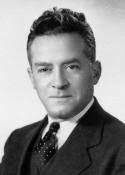
Bernard Metz
Gurdjieff’s Valet, Confidant, or Translator, All Three; More?
There are many people that had significant contact with Mr. Gurdjieff that we know little about. We have a relatively full record of those that were famous in their own right, either before or after meeting Gurdjieff, and those that wrote of their experiences with Mr. Gurdjieff. Beyond that there were people who spent considerable amounts of time with Gurdjieff, working with him or just being with him, that we know little about. One of these is Bernard Metz, an Englishman who, with his brother Louis, first came into contact with P.D. Uspensky in 1921 and through him met Mr. Gurdjieff. Other than his birth on November 27, 1896, little is known of Metz before he met Uspensky, and there are large gaps in the record during his time in the Work, which just fizzled away, at least from an organized standpoint after the Prieuré was closed. His contact dissolved into more or less social connections with those he had developed prior relationships while in the Work, and later morphed into as far as can be determined a more or less total severance after 1960s. He died in 1981. Yet, as we read in other’s books, Metz seems to be in the thick of the Work from the early 1920s until about 1932, often in very close contact with Gurdjieff. He was known as Gurdjieff’s valet, a bit of a degrading title, perhaps his small stature and that fact he was Jewish and rather dapper may have contributed to his believed to be generally low positioning in the hierarchy of Gurdjieff’s pupils. There is reason to believe he may have been much more than a valet. As we read Gurdjieff’s students’ books, he often pops up but is essentially a lost voice sprinkled into the background of the Work during Gurdjieff’s life. While we have books or memoirs by people who met Gurdjieff off and on for a year and sometimes less, here we have a man who spent eight to ten years in direct contact and wrote virtually nothing of his time in the Work.
We do have a few things Metz wrote, some letters to his brother, a published review of In Search of the Miraculous and some peripheral writings from his days in the foreign service, as well as an apocalyptic novella authored in the early 1950s. These, as well as some quotes and information from other writers, represent the extant record. We will touch on a number of aspects of his life, but given the death of information available, a full picture is not possible. So rather than a linear view of Metz, this article will be a few slices of his life. This perhaps can give us a taste of a man who spent a number of years in close contact with Gurdjieff.
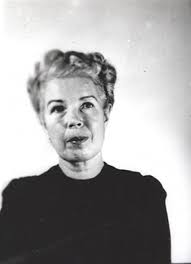
The Axis Connection
Let’s start with one of the stranger aspects of Metz’s life, his relationship with Mildred Gillars (1900-1988). Gillars who was to later become known as “Axis Sally” appears to have first met Metz during one of Gurdjieff’s trips to America. At the time, Gillars was a struggling actress and model living in New York. She was born in Portland Maine. At the age of six, her mother, Mae Sisk, left and later divorced her hard-drinking husband, Vincent Sisk, whom she would never see again. Mae Sisk would later marry an iterant dentist, Robert Gillars, also divorced. The family moved first to Canada and later to Ohio, where Gillars lived much of her childhood and young adulthood, enrolling at Ohio Wesleyan in 1918. Gillars withdrew from college in her senior year, 1922, to begin her acting career, which took her to New York in 1923. She had a marginally successful career taking jobs in touring shows such as My Girl and working as an artist model through the 1920s.
Gurdjieff, with Metz in tow arrived in New York on January 23, 1929, his second visit to America. Gurdjieff, in February, was to give an exhibition of movements at Carnegie Hall. In this instance, he was to use New York Group students rather than bringing a contingent from France. The visit was much lower key, at least publicly, than the 1924 visit. In 1924 a large contingent came from France giving multiple performances/demonstrations in several cities, receiving much public acclaim. The single newspaper notice for this trip was as follows: “Wearing an Astrakhan fez, Georges Gurdjieff…explained painfully in difficult English that his program for the harmonious development of man was somewhat arrested by his close escape from complete demolishment in an automobile accident. Since then, he said, he is lessening the work in his program.”

While the public face presented was subdued relative to the 1924 trip, from a Work standpoint for Gurdjieff’s pupils it apparently was quite intense. Nearly five years had passed since Gurdjieff’s last visit, leaving A.R. Orage as the de facto leader of the Work in America and Gurdjieff’s representative. This trip involved multiple demands for money particularly from Orage and the New York group, as well as Jean Toomer who was running groups in Chicago, and which it is likely Gurdjieff visited. Toomer received a letter in late April 1929 from Metz: “G said very nice things about your group. He was impressed by their earnestness and general attitude. I’ll tell you details when you arrive [at the Prieuré]” It is unclear if Metz is writing of his own volition. But Metz did have a relationship with Toomer, whom he had befriended when he showed up at the Prieuré in the summer of 1924 wandering around directionless for some days. That the 1929 visit, for Orage, was difficult is clear. Orage is quoted at Gurdjieff’s departure saying gleefully, “Thank God I’m free again!”
While it is possible Metz met Gillars in America during Gurdjieff’s January through April 1924 trip, or even in France, it seems more likely that it happened during the1929 visit and that the relationship was an on-again, off-again romance during Gurdjieff’s subsequent three visits to America between February 1930 and January 1932. It seems a focus of all Gurdjieff’s visits was the collection of money to try to save the Prieuré, and to “right” the Orage and Toomer groups which had been operating without direct input from Gurdjieff. Was Metz on all of these trips? While very possible, we only have evidence that he was on the 1924 trip, the1929 trip and the trip which left France on February 15, 1930 and returned on April 11, the other two are cloudy as to his participation. How Metz occupied his time in America, or how he met Gillars is unknown, but it is likely that their lives crossed paths sometime between the arrival in New York on January 23, 1929 and April 5, 1929 when Gurdjieff departed for France. Gillars at the time was tired of an “…endless cycle of audition and rejection…and began to look for hope abroad.” Apparently borrowing the money from the Sculptor, Mario Korbel, for whom she modeled, she arrived in France in May 1929, just few weeks after Metz’s return. This is likely not a coincidence. The dollar was king, the economy booming and the Paris expat American community numbered about 60,000.
If she was involved in a relationship with Metz, it seems likely that she would have visited the Prieuré during this Paris visit. Regardless, it is apparent Metz did not conceal his work with Gurdjieff. Though Gillars downplayed her relationship with Metz, years later she recalled Metz as “…a very serious person who I had known in New York, London and Paris. He had been secretary to a well-known philosopher…We had both been more or less students with the philosopher, and he knew all my ideas on life and ideals, he realized that it was very grave step which I had made, that of leaving the United States, and leaving the theater behind me—which I loved above all else.” This given as part of the transcript of U.S. v. Gillars, her trial after the war.
From Algiers with Love: into the British Foreign Service
After about six months in Paris, Gillars returned to New York just in time for the stock market crash and related down turn in economic activity making an already halting career in the theatre very, very difficult. After struggling for a few years, in 1932 she decided to leave the United States once again and head to Algiers. She was, “…feeling very unhappy about my failure in the American Theater and felt that [ she] would like to get close to nature and have a chance to seek a lot of sunshine, a la Rousseau, back to nature…” Algiers being an odd choice but for the fact that Metz had taken a position as the acting British Vice Consul in Algiers no later than April 1932. Gillars, left the United States in December 1932, landing in France before heading to Algiers at the end of January 1933.
At this time Metz seems to be in a rather odd position, he was now a British diplomat. Gurdjieff had closed the Prieuré in May 1932, though its pending demise would have been foreseen by Metz long before Gurdjieff moved to Paris. It is totally unclear how he got his foreign service posting or what his qualifications were. He had seemingly spent the last ten years as a student and personal secretary/valet of Gurdjieff, a challenging position but hardly one which would be looked to favorably on a foreign service employment resume. And yet suddenly he is a Vice Consul? It does raise an interesting possibility. Did Metz have an ongoing relationship with the British government? We know Gurdjieff himself was under suspicion during his time in Britain due to his alleged activities in Tibet and connections with the Czarist government, part of what was known as “The Great game.” Whether Gurdjieff was part of this activity is unknown but the Brits were suspicious and Gurdjieff had trouble gaining entrance to Britain in the early 1920s. Was Metz originally an intelligence operative? No one knew his background other than he had been a note taker with Uspensky (a Russian) in 1921 and ended up at the Prieuré when it opened in 1922. He certainly put himself into a position to know what was going on as Gurdjieff’s secretary and unofficial concierge of the Prieuré with a view to the large exiled Russian community in France. Regardless, this leaves an open question as to what means of support Metz possessed both before and while he was with Gurdjieff. Yes, it is possible, perhaps likely, he had at least some independent family wealth and connections, an allowance or stipend, but this is not known. He would not have needed much while living at the Prieuré, but not zero. He mentions at least twice that he was left in Chicago during Gurdjieff’s 1924 visit and told to find his own means of travel to return to New York, and having no money, was forced to rely on Traveler’s Aid to return to New York. This incident seems to have made a deep imprint on him. For a poor person this is just how life is lived, but for the well to do this kind of incident can be shattering. He seems well educated, knowing several languages, and in those days a good education was not something that a lower or even middle-class British man, particularly a Jew, would likely have. There seems no record or mention of him serving in WW1, although he would have been the right age to be drafted.
Oddly, it appears while serving in Algiers his relationship with Gurdjieff was not finished as he says, “When he (Gurdjieff) went in 1933[in the autumn] to the United States I had to clean up the mess at Prieuré alone. Gurdjieff wanted all the furniture saved…I was to put everything in storage. He left me no money to do so…Gurdjieff told me when I left, and I was the last person to leave the Prieuré, that I could ask him for what I wanted from the furnishings. Of course, I had no place to store things. From 1933 on I was strictly on my own, and yet Gurdjieff would contact me now and then to ask where the things were.” If what Metz says is accurate, he was being asked to “clean up the mess” while he was a diplomat in Algiers. While this seems possible, it would certainly be awkward. Gurdjieff likely would have known of the position Metz had taken otherwise he would not have been able to contact him. Algeria in 1932 was a colonial possession of France, so communication and travel would not have been a big problem.
Metz seems to have settled into the life of a pre-war diplomat moving from acting to full vice-consul in January of 1934. For Gillars it was a tougher road and as a foreign national, she floundered about Algiers before eventually getting a job as a tutor, from which she was fired, and then more successfully as a model and sales girl for an Algiers’ dressmaker. As her relationship with Metz cooled, she was contacted by her mother, Mae Gillars, and in the summer of 1934 leaving Algiers, she met her mother in Budapest. They toured around, eventually ending up in Berlin where her mother unimpressed, decided to return to America while Mildred decided to stay, she said “I…had…an age-old dream of mine to study music in Germany and…should try it for at least a year…” Mae Gillars returned to America in September after promising to support her daughter in her musical endeavor. Mildred found a teacher and began study, but in short order Mae cut off funding due to “financial reversals,” perhaps having had second thoughts of her daughters limited musical abilities. Finding herself without funds Mildred began the course of jobs, relationships and struggle, which ultimately would lead her to become part of the propaganda machine of the Third Reich, under the name of Axis Sally. Her life, pre-Axis Sally was not easy, at times finding herself in abject poverty. These problems vanished with her collaboration. There is no indication she had any further contact with Metz after leaving Algiers in the summer of 1934. Indeed, she had ample reason to be circumspect as to the relationship. Metz was both British and Jewish, ironically her negative feelings regarding his nationality and religion/ethnicity were both conveniently in sync with Nazi Germany’s ideology and war effort. Her dislike of the Brits probably goes back to her upbringing in an Irish household, and of the Jews to her time as a struggling actress in New York City. “In a July 1943 broadcast, she told listeners that, ‘in a weathered shanty you will never find a Jew. No sir, the Jews are all in marble palaces along Park Avenue and Fifth Avenue, New York City’” One might posit that a failed relationship with a British Jew likely didn’t help soften her attitude. Her war-time propaganda eviscerated Britain and the Jews but was not typically negative toward America or its soldiers who she portrayed as having been duped into the war by—yes, the Brits and the Jews.
There is no record of Metz having any contact with Gurdjieff after the early mid-1930s. He maintained his diplomatic posting as the war approached. Algeria fell to the control of the Vichy French regime after Germany’s successful invasion of France and installation of the puppet Vichy regime. While Germany was at war with Britain, the British embassy in Algiers, being in an area controlled by the Vichy regime and not in German occupied France, was still functioning, if only for a few weeks. Though Britain signed an Armistice with the Vichy regime it was not to last. One of the saddest episodes of the war, called Operation Catapult, took place at Mers-el-Kébir on 3 July 1940 on the Algerian coast. Churchill ordered the destruction of the French fleet to keep it out of German control, the first time in 125 years that the two navies faced off against each other. One result of this attack was the severing of diplomatic relations with Britain by the Vichy regime. Metz apparently stayed in Algiers until 1943. For this to occur from 1940 until November 1942, he was attached to the American Consulate General. He was said to be involved in planning for the allied invasion which began in November 1942 and rumored to have been engaged in espionage, requiring his quickly leaving Algeria and the region. This is probably not true. According to a 1949 letter to his brother, he was the sole representative of the British Empire in Algiers from July 1940 to November 1942 when the Brits returned; but was pushed aside and his “…work given to various lords’ sons…” He wrote that he was offered a posting in Djibouti to get him out of the way, but that he was now too pro-American after having been attached to the American Consulate. This repudiation after the danger he had faced and the work he had done caused him to “boil with rage” and led to his immigration to America and the eventual taking of citizenship in the United States. In speaking of Work on himself, he notes that most of his efforts during the war being neither voluntary or conscious. In other words, he was taken by the external situation.
A quite detailed and authoritative article written by Metz and titled: The North African Imbroglio appears in The American Foreign Service Journal in November of 1943, published a year after the Allied invasion. The writing style clearly influenced by Gurdjieff shows a deep understanding of the region he had lived in for ten years. Here is Metz writing of the Vichy French in North Africa, “They had remained in power with Nazi consent, had preached and practiced collaboration since the Franco-German Armistice in June 1940. They naturally feared reprisals, punishment and dismissal. These power possessing rulers, officials, administrators and military officers had to be carefully handled.” And another, “Almost the whole of this small, disappointed, loudly protesting minority was concentrated in Algiers…the tale of woe was poured. Thus, was spread far and wide for a period of time, a false unfair and one-sided version of the situation.” The resonance of the First Series Style of writing is clear.
Goodbye to King and Country, Hello America
Metz may well have used his connections with the American diplomats to help facilitate his immigration to the United States. We do not know when, but he was in the States by 1944, and was listed as a “foreign agent” which complicated his naturalization and which as of 1949 was not complete. He maintained at least a peripheral interest in the Work. In a 1948 letter to his brother, Louis, who was also with Uspensky in London and at the Prieuré in the beginning and maintained an interest in the Work, he mentions that he had lived in New Jersey only a mile from the “institute” at Mendham. He writes that calling by phone one day to make an appointment to see Madame Uspensky on a social level, his efforts were met with a single word, “No” and “even worse when he tried to see O.” He writes the last time he saw Uspensky was at the Prieuré after Gurdjieff’s accident in 1924, “He was fit, strong and virile bursting with arrogant pep. Poor G was pitifully weak…Now he’s dead and G is still going strong.” While Metz denigrates some people, his respect for “G” as he calls him never seems to waiver. Beyond the personal attachment for Gurdjieff, Work ideas and his experiences are, for Metz, still alive and impactful. While Metz was not involved with group work, he maintained contact with many people from his years in the Work. He hoped to see Gurdjieff the following year (1949) on a visit to Europe, which it appears he did not take due to naturalization issues.
Gurdjieff’s last trip to America was a huge disappointment for Metz and likely his not being informed of it a reflection of the attitude most Work people held of him. He writes in a 1949 letter, “Not a single one lousy member of the group let me know [of Gurdjieff’s visit] …self-centered egotists.” He gets a letter of apology from Paul Anderson confirming Gurdjieff’s return in July 1950, a trip that, though planed, never occurs due to Gurdjieff’s death. But at this time, there was hope and expectation that a consolidation of groups, including the Uspensky people, working under Gurdjieff might occur. Metz though writes, “I personally have little interest in working in public or in any group working for or with others—enough to do working on myself.” Then after Gurdjieff’s death, he softens and writes, “For me his death is a great blow for personal and ‘work’ reasons. I had much to ask him after all these years, and as I believe, continuous work on myself. I wanted him to ‘see’ and advise….Well, he is dead his work lives. What form it will take and what part I will play, if any, time will show. Yes, I am one of the very few if not the only one in addition to M de Salzman who was so close to him and his ideas during many years…” It seems Gurdjieff’s death shocks him to the possibility of re-entering some form of the Work. In Search of the Miraculous was just published. He writes to Louis, “The contents of his [Uspensky] lectures we received 1921-22—almost identical. But studying them after 28 years, one realizes the difference between head-information and being-knowledge.” Later in the letter Metz notes, “After 10 months of lectures I wrote to G… ‘I am tired of talking, talking, talking isn’t there anything else?’ He immediately replied ‘come!’. So I was the first of O’s pupils to go to Paris a couple of months before the Prieuré was bought.”
Metz published a review of Uspensky’s Search in The Christian Register, a Unitarian publication, in January 1950. Entitled One Man’s Place in the Scheme of Things—Between the Planets and the Moon, it begins: “Who has not at moments of “awakening” stopped to ponder on the meaning and purpose of existence; of this inescapable round of little pleasure, much pain and more monotony to be ended only by death; of working to have the means to eat and eating to have the strength to work; of laboring to rebuild what we destroy and destroying what we rebuild?”
Metz marries in the late 1940s. His wife, Josephine, has a child, John, in 1950, followed by a daughter, Emily, in 1952. Life seems pretty easy; he maintains some connections with Work people and apparently writes several novels which were not published. Of one called The Pearl of Great Price he writes, “…I tried to introduce a few basic ideas of G.-which people can’t grasp-via New Testament Teachings—which people can grasp.” (August 1961). At some time in the 1950s he moved to Lake Worth, Florida, his name changed to Bernard Mayne. Why he changed his name is not clear.
In 1955 Metz used a subsidy publisher to print a booklet called The Great Atomic Disaster (Blueprint for Survival). The 69-page work of fiction was no doubt timely, dealing with a Russian super bomb test explosion and an associated atomic disaster of seemingly unstoppable radiation. The book is written from a decidedly negative view of “Russia” and a very positive view of the United States. The hero of the back story is a self-named street preacher “The Herald of the Wrath to Come,” who when asked what his teaching was replied, “I call all men to turn to God and live as if they might die at any moment.” The preacher, thought to be crazy, is institutionalized. A doomsday spread of radiation wiping out all life spreads Eastward from the test explosion site, eventually crossing the Pacific and coming to the United States, killing many and disrupting ordinary life. As it encircles the entire earth, the radiation diffuses to some extent. There are pockets of death appearing and disappearing in a random fashion across the globe, eventually life adjusts to this. “There was no definite pattern in Death’s plan. No possible way of knowing which area would be affected next. People grew accustomed to living in the shadow of death. The force of life and habit drove them back to their daily tasks.” A dystopian world unfolds worse or better depending on the culture and political system. “The epidemics spread over the face of the Earth and wrought greater havoc…many millions died, especially in Asia.” Metz’s view of the United States is unfailingly positive, if not very prescient. He writes, “Mass inoculations, rigorous measures…and inspection…were taken by the United States and other countries,…the United States unhesitatingly, without thought of expense or terrible risk…sent many tons of drugs and medical supplies by air with teams of doctors and workers, all volunteers…” With the spread of the plagues the deadly, atomic radiations gradually diminished. Eventually, both subsided but in Russia people let down their guard and an isolated pocket of radiation blew across Moscow taking out the communist government and, “…Godless Communism…cancerous roots had been extirpated…eventually the atomic radiations disappeared from the Earth’s atmosphere into space back to their Prime Source.” A new world order ensued of peace and prosperity built off the ruins of the past. During the period of death, the street preacher had reappeared as “Herald of the Good to Come” and preaches a decidedly Gurdjieffian/Metzian, if somewhat dualistic, simplified religious, message he writes, “Whenever the destructive, evil, negative forces generated by millions of human beings accumulate to the point of becoming dangerous to Cosmic Harmony and Equilibrium, the wars and disasters occur.” After the Golden age ensues, the preacher returns as “the Herald of the Terror to Come” only to be arrested and institutionalized again. And so, the cycle returns.
The booklet and the review of Search represent the only published work by Metz to put Work ideas into the world. A question put to him by several people, including his brother: was he going to write directly about his time with Gurdjieff? Metz replies to his brother, “No I am not writing about G. There is an old Buddhist saying: He who knows not speaks, He who knows, speaks not.” In the late 1960’s he finds himself at Luba’s Bistro in southwest London. Paul Beekman Taylor by happenstance is also there. Taylor much younger, the son of Edith Taylor and half brother to one of Gurdjieff’s children, had met Metz a few times in the mid-1940s in a social context. Luba, Gurdjieff’s niece, points him out and they engage in an interesting conversation, during which the subject of Metz writing a book on Gurdjieff arises with Taylor suggesting he write a book, noting that Fritz Peters had already done so Taylor writes, “Metz laughed and said that Fritz had taken credit for things he never did, had invented things that never happened, but had made so much money from the first book that he was writing another.” His attitude toward Fritz Peter’s book, Boyhood with Gurdjieff, is elaborated in a letter to his brother, “Fritz’s book is a tissue of lies, an attempt at self-glorification, a portrayal of a super-boy. The only good thing he did was draw a sympathetic portrayal of G.” He goes through some of the things Peters claimed to do and did not, including chair bearer after Gurdjieff’s accident. Metz writes to Louis, “These were my jobs. I wonder why Fritz identified himself with me?” Metz found the idea that G would confide his motives regarding certain actions to an 11-year-old boy preposterous. “G as you know, never explained his motives to anyone.” Metz also tells Taylor that, at Lord Pentland’s request, he has given all his papers concerning Gurdjieff to the New York Foundation Archive, “I thought that at least those keep the record straight, so I gave him everything. What did I get in return? Nothing, not even thanks.” Metz’s attitude of being spurned and denigrated by Work people, not being given “credit” for the work tasks he performed is recurrent.
His work as translator for the First Series is well accepted. He tells his brother he also translated the Second Series. The degree of participation in the translation into English of which Metz claims the vast majority as his work is an open question. Orage is typically given most credit, and no doubt the final version was a product of Orage. This doesn’t entirely conflict with Metz’s claim of his doing what might be called the “nuts and bolts” work on a continually changing manuscript. Metz says he reworked the translation “From the Author” at least 20 times. While Metz was a qualified writer, he in no way had the editorial ability, the panache of Orage. An incident from the 1930 trip illustrates the difference. Gurdjieff, upon arrival in America, was given a harmonium as a welcoming gift. Louise Welch recalls, “Someday, Gurdjieff declared, after he was gone, the world would take note of this event. The harmonium would by then have become a—there he searched for the word in English…He turned toward one of his pupils, named Metz, who hastily supplied a word: ‘Souvenir’ he said. ‘It would be a souvenir.’ Gurdjieff was not satisfied and turned to Orage who was shaking his head. Gurdjieff asked him what he would say.‘Sacred relic,’ Orage answered with an appropriate intonation. That exuberant laugh of Gurdjieff’s,…rang out…” Perhaps, so to say, after Gurdjieff prepared and cooked the full meal, Metz helped plate and serve, while Orange dressed the salad and put on the garnishes.
Inscrutable?
Was he a valet or Gurdjieff’s private secretary? Metz says, “From the beginning at the Prieuré I did everything for Gurdjieff. I was his maître d’hộtel and administrator. I was his real secretary, while all those woman—Olga de Hartman, Louise Goepfert, Solita Solano and Rita Romilly—got credit for work I did. I wrote his letters, even the most personal, and I was sworn to secrecy. I know more about Gurdjieff’s life than anyone else alive [late 1960s]. I wince every time I read someone’s revelation about him that is pure invention…I did the entire translation of All and Everything. De Hartman translated from Russian to English with a dictionary, coming up with the most ridiculous things. I went over every word and put it in good English before it was sent over to Orage in New York.” Likely Metz was far more than a valet, but likely a bit less than he presents himself. And perhaps the answer to the question of why Metz never wrote a book about his time with Gurdjieff is that Metz was honoring his vow of secrecy to Gurdjieff. Certainly, he had much material after ten years with Gurdjieff. He clearly knew it had a very good chance of being successful and he was a decent writer who could have easily written a very revealing book, one that would have put him in the role of Gurdjieff’s confidant and given him the “credit” he so clearly desired. Yet he did otherwise, going against Metz the person, and honored his vow. That is the Work.
—Richard Myers— http://www.growingchoongary.com
___________________
Notes
- Wearing an Astrakhan fez. William Patrick Patterson, George Ivanovitch Gurdjieff: The Man, The Teaching, His Mission (Fairfax, CA: Arete Communications, 2018), 244.
- G said very nice. Paul Beekman Taylor, Gurdjieff’s America: Mediating the Miraculous (Lighthouse Editions Limited, 2004), 137.
- Thank God I’m free again. Patterson, George Ivanovitch Gurdjieff, 245.
- Endless cycle of audition and rejection. Richard Lucas, Axis Sally: The American Voice of Nazi Germany (Havertown, PA: Casemate, 2010), 32.
- a very serious person. Lucas, Axis Sally,36.
- feeling very unhappy about my failure. Lucas, Axis Sally, 36.
- When he (Gurdjieff) went in 1933. Taylor, Gurdjieff’s America, 216
- an age-old dream. Lucas, Axis Sally, 40.
- In a July 1943 broadcast. Lucas, Axis Sally, 33.
- work given to various lords’ sons. Bernard Metz to Louis Metz, 8 February 1949.
- They had remained in power. Bernard Metz, The North African Imbroglio (The American Foreign Service Journal, Vol. 20, No. 11, November 1943).
- The last time he saw Uspensky. Bernard Metz to Louis Metz, 12 October 1948.
- Not a single one. Bernard Metz to Louis Metz, 18 March 1949.
- For me his death. Bernard Metz to Louis Metz, 9 November 1949.
- Who has not at moments of awakening. Bernard Metz, One Man’s Place in the Scheme of Things—Between the Planets and the Moon (The Christian Register, January 1950.
- I call all men to turn to God, Bernard Mayne, The Great Atomic Disaster: Blueprint for Survival (Daytona Beach, FL: College Publishing Company, 1955), 8.
- There was no definite pattern. Mayne, The Great Atomic Disaster, 56.
- The epidemics spread. Mayne, The Great Atomic Disaster, 60-63.
- Herald of the Good to Come. Mayne, The Great Atomic Disaster, 50.
- No I am not writing about G. Bernard Metz to Louis Metz, 8 August 1961.
- Metz laughed. Taylor, Gurdjieff’s America, 217.
- Fritz’s book is a tissue of lies. Bernard Metz to Louis Metz, 1964.
- I thought that at least. Taylor, Gurdjieff’s America, 217.
- Someday, Gurdjieff declared. Louise Welch, Orage With Gurdjieff in America (Boston, MA: Routledge & Kegan Paul, 1982), 95.
- From the beginning at the Prieuré. Taylor, Gurdjieff’s America, 216.
 Open to Openness